Famous People Born In 1900
Discover the most famous people born in 1900. The list includes people like Martin Bormann, Spencer Tracy, Wolfgang Pauli, Aaron Copland, Zelda Fitzgerald and many more. This list of celebrities is loosely sorted by popularity. People featured on this list, include political leaders, novelists, journalists and soldiers born in 1900. This list includes people from United States, Germany, United Kingdom & Japan and many more countries.
Vote for Your Favourite Person
Right IconThis ranking is based on an algorithm that combines various factors, including the votes of our users and search trends on the internet.
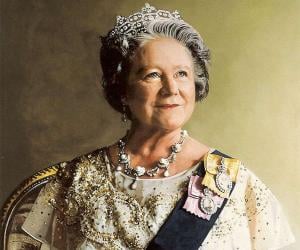
Birthdate: 4th August
Sun Sign: Leo
Birthplace: Hitchin, London
Died: March 30, 2002
Elizabeth Bowes-Lyon, better known as The Queen Mother, was King George VI’s wife and the mother of Queen Elizabeth II and Princess Margaret. She ruled England as the Queen from 1936 to 1952, after which her daughter Elizabeth II took over. She was also the last empress of India.
2
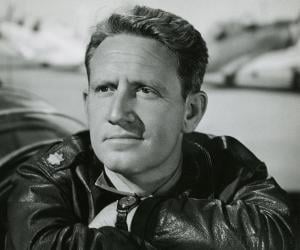
Spencer Tracy(One of the Greatest Actors of Hollywood's Golden Age)
Birthdate: 5th April
Sun Sign: Aries
Birthplace: Milwaukee, Wisconsin, United States
Died: June 10, 1967
One of the most popular actors of classical Hollywood cinema, Spencer Tracy was known for his versatility, which helped him win two successive Oscars for Best Actor. In 1999, he was ranked the ninth greatest male star of Hollywood's Golden Age by the American Film Institute. Tracy is widely regarded as one of the finest actors of the 20th century.
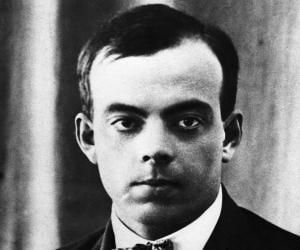
Birthdate: 29th June
Sun Sign: Cancer
Birthplace: Lyon, France
Died: July 31, 1944
French writer, poet, aristocrat, and journalist, Antoine de Saint-Exupery, is best remembered for his novella, The Little Prince. He was a pioneering aviator as a young man. A successful commercial pilot before World War II, he joined the French Air Force at the start of the war. Equally successful as a writer, he won several of France's highest literary awards.
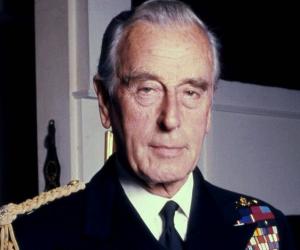
Birthdate: 25th June
Sun Sign: Cancer
Birthplace: Frogmore House, Windsor, England
Died: August 27, 1979
The last Viceroy of India and the first governor-general of independent India, Lord Mountbatten was a British Royal Navy officer and statesman. Born to a prominent aristocratic family in England, he had a successful military career and was made the NATO Commander Allied Forces Mediterranean in his later career. He was assassinated in 1979.
5
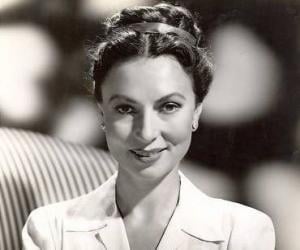
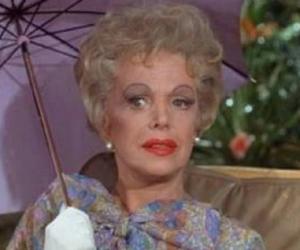
Agnes Moorehead(Best Known for Her Role as ‘Endora’ in the TV Series ‘Bewitched’)
Birthdate: 6th December
Sun Sign: Sagittarius
Birthplace: Clinton, Massachusetts, United States
Died: April 30, 1974
Agnes Moorehead is best known for her Emmy-winning performance in the series The Wild Wild West and her Golden Globe-winning roles in the films Mrs. Tarkington and Hush...Hush, Sweet Charlotte. She was also famous as Endora from the series Bewitched. She was the first female to host the Academy Awards.
6
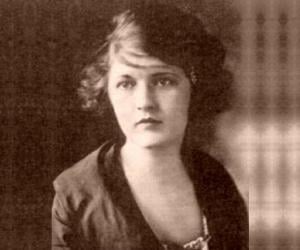
Zelda Fitzgerald(Socialite & Referred to as 'The first American Flapper' by Her Husband 'F. Scott Fitzgerald')
Birthdate: 24th July
Sun Sign: Leo
Birthplace: Montgomery, Alabama, United States
Died: March 10, 1948
Zelda Fitzgerald was a painter, socialite, and novelist. Along with her husband Scott Fitzgerald, Zelda became a prominent personality of the Jazz Age. Renowned for her high spirits and beauty, she was named the first American flapper by Scott. For her work as a novelist and painter, Fitzgerald was posthumously made an inductee to the Alabama Women's Hall of Fame.
Birthdate: 14th November
Sun Sign: Scorpio
Birthplace: Brooklyn, New York, United States
Died: December 2, 1990
Birthdate: 5th November
Sun Sign: Scorpio
Birthplace: New York City, New York, USA
Died: April 10, 1991
Birthdate: 10th October
Sun Sign: Libra
Birthplace: Washington, D.C., United States
Died: March 17, 1993
Birthdate: 17th October
Sun Sign: Libra
Birthplace: Plattsburgh
Died: June 19, 1991
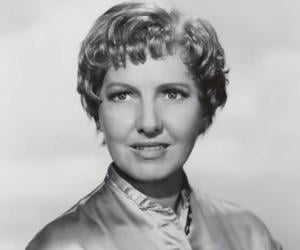
Jean Arthur was an American film and Broadway actress whose performances in films like Mr. Deeds Goes to Town and You Can't Take It with You established her as the quintessential comedic leading lady of Hollywood. Jean Arthur's contribution to the film industry earned her a star on the Hollywood Walk of Fame.
Birthdate: 8th November
Sun Sign: Scorpio
Birthplace: Atlanta, Georgia, United States
Died: August 16, 1949
Birthdate: 5th February
Sun Sign: Aquarius
Birthplace: Los Angeles, California, United States
Died: July 14, 1965
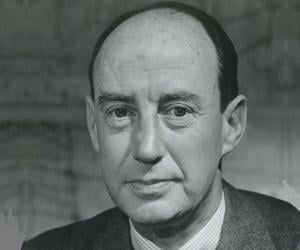
Adlai Stevenson II served as the Illinois governor from 1949 to 1953. He contested as the Democratic presidential nominee in 1952 and 1956 but was defeated by Republican Dwight D. Eisenhower both the times. Stevenson II also served as the U.S. ambassador to the United Nations from 1961 to 1965.
Birthdate: 9th October
Sun Sign: Libra
Birthplace: Edinburgh, Scotland, UK
Died: August 19, 1976
14
Wolfgang Pauli(One of the Pioneers of Quantum Physics and Winner of 1945 Nobel Prize for Physics)
Birthdate: 25th April
Sun Sign: Taurus
Birthplace: Vienna, Austria
Died: December 15, 1958
Nobel Prize-winning Austrian physicist Wolfgang Pauli is remembered for his contribution to quantum physics and for laying down the Pauli principle. While he was initially married to a cabaret dancer, the marriage ended in a divorce after a year. His written works are considered classics in science.
15
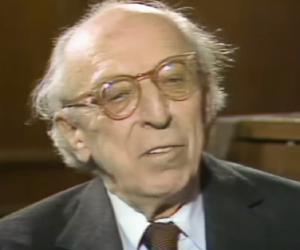
Erich Fromm(German Social Psychologist and Psychoanalyst & One of the Founders of The 'William Alanson White Institute')
Birthdate: 23rd March
Sun Sign: Aries
Birthplace: Frankfurt, Germany
Died: March 18, 1980
Erich Fromm was a German social psychologist, psychoanalyst, sociologist, and socialist. A German Jew, he fled the Nazi regime and settled in the United States. He was a co-founder of The William Alanson White Institute and was associated with the Frankfurt School of critical theory. He is best remembered for authoring the book Escape from Freedom.
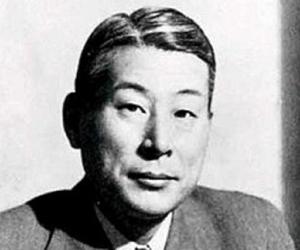
Birthdate: 1st January
Sun Sign: Capricorn
Birthplace: Kozuchi Town (now Mino, Gifu Prefecture), Japan
Died: July 31, 1986
Chiune Sugihara was a Japanese diplomat best remembered for helping thousands of Jews flee Europe during the Second World War. He did so by issuing transit visas to the Jews, enabling them to travel through Japanese territory. Sugihara helped the Jews despite knowing that he was risking the lives of his family and his job.
Birthdate: 3rd August
Sun Sign: Leo
Birthplace: Dana, Indiana, United States
Died: April 18, 1945
18
Xavier Cugat
(Spanish Musician and Bandleader)
Birthdate: 1st January
Sun Sign: Capricorn
Birthplace: Girona, Catalonia, Spain
Died: October 27, 1990
Xavier Cugat was a Spanish musician and bandleader. He studied classical violin as a child and began working in silent films to support his family. He grew up to become a successful musician and played a leading role in the spread of Latin music. Besides music, he was also a cartoonist and a restaurateur. He was married five times.
19
Clyde Tolson(1st Associate Director of the Federal Bureau of Investigation)
Birthdate: 22nd May
Sun Sign: Gemini
Birthplace: Laredo, Missouri, United States
Died: April 14, 1975
Clyde Tolson was an American associate director of the FBI from 1930 to 1972. He is perhaps best remembered for his relationship with FBI Director J. Edgar Hoover; it has been speculated that Clyde Tolson shared an intimate relationship with Hoover.
Birthdate: 17th March
Sun Sign: Pisces
Birthplace: New Haven, Connecticut, United States
Died: February 17, 1970
21
Henry Sturgis Morgan
(American Banker and Co-Founder of 'Morgan Stanley')
Birthdate: 24th October
Sun Sign: Scorpio
Birthplace: London, England
Died: February 8, 1982
The grandson of J.P. Morgan founder John Pierpont Morgan, Sr., Henry Sturgis Morgan co-founded the multinational investment company Morgan Stanley. A Harvard alumnus, he also headed the Morgan Library & Museum as its president and chairman. A sailing enthusiast, too, he was part of the New York Yacht Club.
22
Hyman Rickover
(United States Navy Admiral)
Birthdate: 27th January
Sun Sign: Aquarius
Birthplace: Makow Mazowiecki, Poland
Died: July 8, 1986
Hyman Rickover was an admiral who served in the U.S. Navy. Rickover is credited with overseeing the development of naval nuclear propulsion before controlling its operations for 30 years. He also supervised the development of the first commercial pressurized water reactor, the Shippingport Atomic Power Station. Hyman Rickover is one of only four people to receive two Congressional Gold Medals.
Birthdate: 23rd September
Sun Sign: Libra
Birthplace: Quanah, Texas, United States
Died: November 17, 1967
Birthdate: 19th March
Sun Sign: Pisces
Birthplace: Paris
Died: August 14, 1958
Frédéric Joliot-Curie was a French physicist whose discovery of artificial radioactivity earned him the 1935 Nobel Prize in Chemistry, which was jointly awarded to Frédéric and his wife Irène Joliot-Curie. Along with his wife, Frédéric is credited with founding the Orsay Faculty of Sciences, a physics and mathematics school within Paris-Saclay University. He had also won the Stalin Peace Prize.
Birthdate: 3rd August
Sun Sign: Leo
Birthplace: Paducah, Kentucky, United States
Died: October 21, 1970
26
J. Willard Marriott
(Founder of the 'Marriott International, Inc')
Birthdate: 17th September
Sun Sign: Virgo
Birthplace: Marriott-Slaterville, Utah, United States
Died: August 13, 1985
Born in Utah, Marriott founder J. Willard Marriott grew up helping his parents on their family farm. The hotel tycoon began his career selling root beer and gradually launched a restaurant chain. The first Marriott hotel was basically a motel and eventually grew into a US$4.5 billion empire.
27
Kurt Weill(German-American Composer Best Known for His Work ‘The Threepenny Opera’)
Birthdate: 2nd March
Sun Sign: Pisces
Birthplace: Dessau, Germany
Died: April 3, 1950
Kurt Weill was a German composer best remembered for his collaboration with Bertolt Brecht. An influential composer, Weill's music has been recorded by several performers like Frank Sinatra and David Bowie. Singers like Marianne Faithfull and Anne Sofie von Otter have recorded several albums of his music. His music continues to be performed in classical as well as popular contexts.
28
William Haines
(Actor, Interior designer)
Birthdate: 2nd January
Sun Sign: Capricorn
Birthplace: Staunton, Virginia, United States
Died: December 26, 1973
Birthdate: 15th October
Sun Sign: Libra
Birthplace: San Francisco, California, United States
Died: September 13, 1987
30
Mária Telkes
(Biophysicist)
Birthdate: 12th December
Sun Sign: Sagittarius
Birthplace: Budapest, Hungary
Died: December 2, 1995
31
Cecilia Payne-Gaposchkin
(American Astronomer and Astrophysicist)
Birthdate: 10th May
Sun Sign: Taurus
Birthplace: Wendover, Buckinghamshire, England
Died: December 7, 1979
After losing her father at 4, Cecilia Payne-Gaposchkin was raised singlehandedly by her mother. The incredibly talented Cecilia studied at Cambridge but failed to secure a degree because of her gender. She later joined Harvard and opposing prevalent beliefs, proposed that stars were mainly made of hydrogen and helium.
32
Lefty Grove
(American Professional Baseball Player Who Played as Pitcher)
Birthdate: 6th March
Sun Sign: Pisces
Birthplace: Lonaconing, Maryland, United States
Died: May 22, 1975
33
Maria of Yugoslavia
(Consort)
Birthdate: 6th January
Sun Sign: Capricorn
Birthplace: Gotha, Germany
Died: June 22, 1961
34
Hans Adolf Krebs(British Biologist Who was a Pioneer Scientist in the Study of Cellular Perspiration)
Birthdate: 25th August
Sun Sign: Virgo
Birthplace: Hildesheim, Germany
Died: November 22, 1981
Born to an ENT surgeon in Germany, Hans Adolf Krebs followed in his father’s footsteps and studied medicine. After fleeing Nazi Germany, he went to England, where he joined the University of Cambridge as a researcher. The Nobel Prize-winning scientist is remembered for his groundbreaking discovery of cellular respiration.
35
Hack Wilson
(Baseball player)
Birthdate: 26th April
Sun Sign: Taurus
Birthplace: Ellwood City, Pennsylvania, United States
Died: November 23, 1948
Birthdate: 14th October
Sun Sign: Libra
Birthplace: Sioux City
Died: December 20, 1993
Born to a lawyer, William Edwards Deming grew up to become a renowned mathematical physicist and later taught statistics at the New York University. His research focused on the application of statistical methods to improve quality control in various industries. His ideas were later widely used by Japanese corporates.
Birthdate: 5th June
Sun Sign: Gemini
Birthplace: Budapest
Died: February 8, 1979
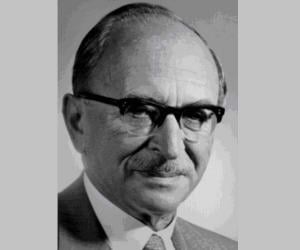
Dennis Gabor was a Hungarian-British physicist and electrical engineer best remembered for inventing holography. His invention earned him the prestigious Nobel Prize in Physics in 1971. Gabor won several awards during his lifetime. After his demise, many awards are given in his honor. The Dennis Gabor Award and Gabor Medal are some of the awards that are named after him.
38
Karl Wolff
(Politician, Officer)
Birthdate: 13th May
Sun Sign: Taurus
Birthplace: Darmstadt
Died: July 17, 1984
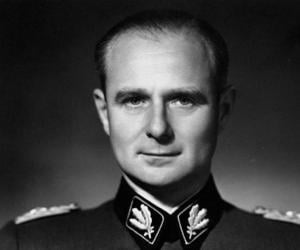
Karl Wolff was a German SS official during World War II. By the end of the war, Wolff was serving as the Supreme SS and Police Leader in Italy, where he played a major role in bringing the war to an end sooner than in the rest of Europe. Wolff was prosecuted in 1962 for the deportation of Italian Jews.
39
Prince Henry, Duke of Gloucester
(Politician)
Birthdate: 31st March
Sun Sign: Aries
Birthplace: York Cottage, England
Died: June 10, 1974
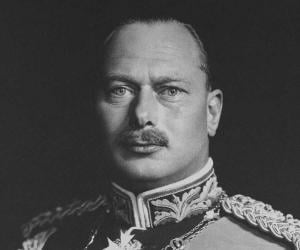
Son of King George V and Queen Mary, Prince Henry, Duke of Gloucester, was educated at Eton, becoming the first son of a monarch in Britain to attend school. He made headlines with his affair with Beryl Markham. Owing to his multiple strokes, he was wheelchair-bound in his final years.
40
Michael Llewelyn Davies
(Student)
Birthdate: 16th June
Sun Sign: Gemini
Birthplace: London, England
Died: May 19, 1921
Birthdate: 4th February
Sun Sign: Aquarius
Birthplace: Neuilly-sur-Seine, France
Died: April 11, 1977
42
James Bond
(US Ornithologist and an Expert on Birds of the Caribbean)
Birthdate: 4th January
Sun Sign: Capricorn
Birthplace: Philadelphia
Died: February 14, 1989
US ornithologist James Bond is remembered as the author of Birds of the West Indies. British author Ian Fleming, himself a bird enthusiast, borrowed his name to create James Bond, the iconic fictional spy. He was mostly associated with the Academy of Natural Sciences of Philadelphia’s Drexel University.
Birthdate: 5th January
Sun Sign: Capricorn
Birthplace: Paris, France
Died: January 15, 1955
Birthdate: 9th April
Sun Sign: Aries
Birthplace: Staten Island, New York, United States
Died: July 20, 1974
Birthdate: 23rd March
Sun Sign: Aries
Birthplace: Alexandria
Died: November 30, 1989
Egyptian architect Hassan Fathy is best remembered for his innovative idea of building planned communities using age-old methods such as mud-brick and adobe. His book Architecture for the Poor detailed his efforts in building the village of New Gourna. His signature technique was known as appropriate technology.
46
Salote Tupou III
(Queen of Tonga from 1918 to 1965)
Birthdate: 13th March
Sun Sign: Pisces
Birthplace: Royal Palace, Tonga Royal Palace, Tonga
Died: December 16, 1965
Birthdate: 15th October
Sun Sign: Libra
Birthplace: Berlin, Germany
Died: November 18, 1993
Birthdate: 22nd May
Sun Sign: Gemini
Birthplace: Calais
Died: November 8, 1979
49
Werner Haase
(German Physician and Medicine Professor)
Birthdate: 2nd August
Sun Sign: Leo
Birthplace: Köthen, Germany
Died: November 30, 1950
Originally professor of medicine, Werner Haase served as the deputy personal physician of German Chancellor Adolf Hitler from 1933 until the latter’s death in 1945, remaining with him in the Führerbunker to the very end. After Hitler committed suicide, he continued serving wounded soldiers and civilians until he was made a prisoner of war and died while serving his term.
50
Helen Mary Gahagan Douglas
(Actress)
Birthdate: 25th November
Sun Sign: Sagittarius
Birthplace: Boonton, New Jersey, United States
Died: June 28, 1980