Famous People Who Died In 1875
Discover the most famous people died who died in the year 1875. This list includes people like Andrew Johnson, Hans Christian Andersen, Georges Bizet, John C. Breckinridge, Charles Lyell and many more. This list of celebrities is loosely sorted by popularity. People featured on this list, include political leaders, artists, military leaders and inventors who died in 1875. This list includes people from France, United States, United Kingdom and many more countries.
Vote for Your Favourite People Who Died In 1875
Right IconThis ranking is based on an algorithm that combines various factors, including the votes of our users and search trends on the internet.
Birthdate: April 2, 1805
Sun Sign: Aries
Birthplace: Odense, Denmark
Died: August 4
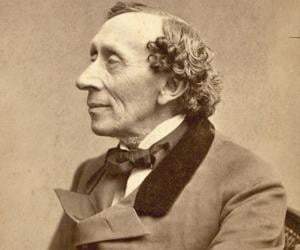
Legendary Danish children’s author Hans Christian Andersen is remembered for his fairy tales, such as The Little Mermaid, The Little Match Girl, The Emperor's New Clothes, and Thumbelina, which have been appreciated by the young the old alike. Many of his tales have been adapted into films, ballets, and plays.
Birthdate: December 29, 1808
Sun Sign: Capricorn
Birthplace: Raleigh, North Carolina, United States
Died: July 31
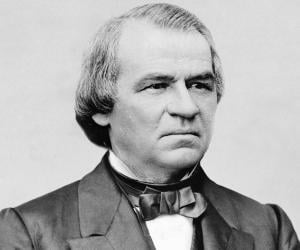
The 17th president of the United States, Andrew Johnson assumed the presidency while serving as the vice president when Abraham Lincoln was assassinated. Born in poverty, Andrew Johnson did not attend school. However, he worked his way up to become a prominent politician—an inspiring story indeed!
Birthdate: October 25, 1838
Sun Sign: Scorpio
Birthplace: Paris, France
Died: June 3
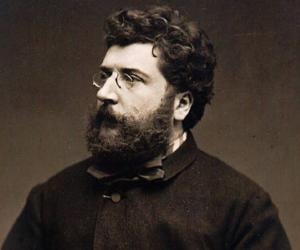
Georges Bizet was a French composer whose career was cut short by his untimely demise at the age of 36. Since his death in 1875, Bizet's final work Carmen has become one of the most frequently performed works in the opera repertoire. Although he couldn’t achieve success during his lifetime, Bizet's death is considered a loss to French musical theatre.
Birthdate: January 16, 1821
Sun Sign: Capricorn
Birthplace: Lexington, Kentucky, United States
Died: May 17
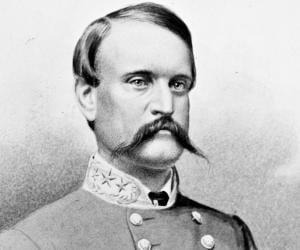
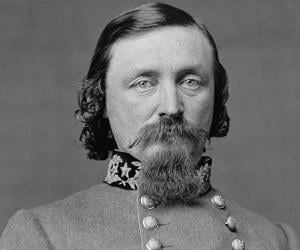
From being the youngest vice-president of the United States to joining the Confederate Army during the American civil war, John Breckinridge was a controversial figure in politics. While he was regarded as a shrewd military commander, the former Democratic Congressman was considered a traitor in the northern region. He fled the US after the Civil War but later on returned.
Birthdate: January 16, 1825
Sun Sign: Capricorn
Birthplace: Richmond, Virginia, United States
Died: July 30
Birthdate: April 19, 1793
Sun Sign: Aries
Birthplace: Vienna, Austria
Died: June 29
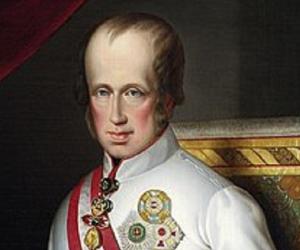
Ferdinand I of Austria reigned as the Austrian emperor from 1835 until his retirement in 1848. As the emperor of Austria, Ferdinand also ruled as the king of Croatia, Hungary, and Bohemia. He also served as the king of Lombardy–Venetia and held several other lesser titles, which any emperor of Austria is entitled to hold.
Birthdate: August 29, 1792
Sun Sign: Virgo
Birthplace: Warren, Connecticut, United States
Died: August 16
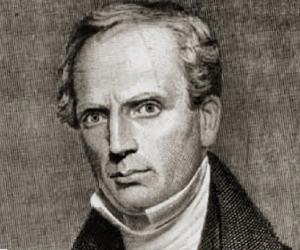
Charles Grandison Finney, dubbed as the Father of Modern Revivalism, began his career with the Presbyterian Church, where his style of preaching fermented spirited revivals. Later, his dissatisfaction with Presbyterian theology led to formation of Broadway Tabernacle and he started promoting abolitionism and equal education for women and blacks. He spent his last years as minister of Oberlin’s First Congregational Church.
8
Jean-François Millet
(Artist)
Birthdate: October 4, 1814
Sun Sign: Libra
Birthplace: Gréville-Hague, La Hague, France
Died: January 20
9
Isaac Singer
(Actor, Inventor)
Birthdate: October 27, 1811
Sun Sign: Scorpio
Birthplace: New York
Died: July 23
Birthdate: July 16, 1796
Sun Sign: Cancer
Birthplace: Paris, France
Died: February 28
French painter Camille Corot is remembered for his landscape paintings that paved the path for the Impressionist movement. Born into a milliner’s family, Corot was a poor student and shunned his family business to learn painting at 25. His works, however, were easy to replicate and led to many forgeries.
11
Young Tom Morris
(Scottish Professional Golfer)
Birthdate: April 20, 1851
Sun Sign: Taurus
Birthplace: St. Andrews, Scotland
Died: December 25
Height: 5'8" (173 cm)
Birthdate: February 16, 1812
Sun Sign: Aquarius
Birthplace: Farmington
Died: November 22
13
Tongzhi Emperor
(9th Emperor of the Qing dynasty)
Birthdate: April 27, 1856
Sun Sign: Taurus
Birthplace: Forbidden City, Beijing, China
Died: January 12
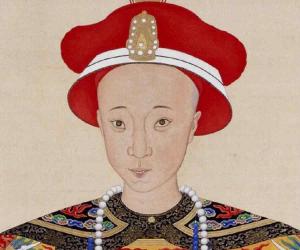
Tongzhi Emperor was the Emperor of the Qing dynasty who reigned from 1861 to 1875. The predecessor of Xianfeng Emperor, Tongzhi was the eighth Qing emperor to reign over the Eighteen Provinces. Tongzhi was a puppet emperor whose reign was overshadowed by the influence of his mother Empress Dowager Cixi over state affairs.
Birthdate: November 14, 1797
Sun Sign: Scorpio
Birthplace: Angus
Died: February 22
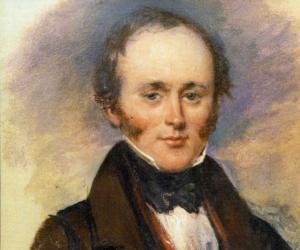
Charles Lyell was a Scottish geologist best remembered for his work Principles of Geology, which explains the origin of the earth. He is also remembered for his pioneering explanation of climate change. A close friend of Charles Darwin, Charles Lyell is also credited with influencing many of Darwin's works pertaining to the theories of evolution.
15
John Edward Gray
(Zoologist)
Birthdate: February 12, 1800
Sun Sign: Aquarius
Birthplace: Walsall, England, United Kingdom
Died: March 7
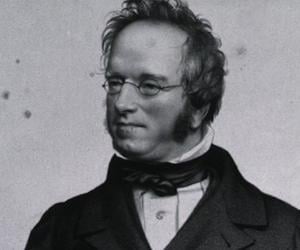
John Edward Gray was a British zoologist best remembered for his association with the British Museum in London, where he was the keeper of zoology from 1840 to 1874. John Edward Gray is also remembered for publishing several records of the museum collections that included descriptions of new species.
16
Eliphas Levi
(French Ceremonial Magician, Occultist and Author of 19th Century Book 'Transcendental Magic')
Birthdate: February 8, 1810
Sun Sign: Aquarius
Birthplace: Paris, France
Died: May 31
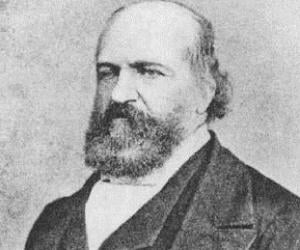
Alphonse Louis Constant, better known by his pseudonym, Eliphas Levi, had abandoned his wish to become a Catholic priest to become a famed magician, occultist, and author of the 19th century. He is best remembered for his iconic work Transcendental Magic, its Doctrine and Ritual and his theory of magic.
Birthdate: February 6, 1802
Sun Sign: Aquarius
Birthplace: Barnwood, Gloucestershire, England, United Kingdom
Died: October 19
18
Aleksey Konstantinovich Tolstoy
(One of the Most Important 19th-Century Russian Historical Dramatist)
Birthdate: September 5, 1817
Sun Sign: Virgo
Birthplace: Saint Petersburg, Russia
Died: October 10
Aleksey Konstantinovich Tolstoy was the second cousin of Leo Tolstoy and a gifted poet, playwright, novelist, and satirist, who often made use of historical themes. His iconic trilogy of historical dramas, consisting of The Death of Ivan the Terrible, Tsar Fyodor Ioannovich, and Tsar Boris, was widely acclaimed.
19
Francis V, Duke of Modena
(Prince)
Birthdate: June 1, 1819
Sun Sign: Gemini
Birthplace: Modena, Italy
Died: November 20
20
William Sterndale Bennett
(Composer)
Birthdate: April 13, 1816
Sun Sign: Aries
Birthplace: Sheffield, Yorkshire, England
Died: February 1
21
Henri Labrouste
(architect)
Birthdate: May 11, 1801
Sun Sign: Taurus
Birthplace: Paris
Died: June 24
Part of the École des Beaux-Arts school of architecture, French architect Henri Labrouste is best known for popularizing iron frame construction. The Prix de Rome winner also designed the Bibliothèque Sainte-Geneviève and the Bibliothèque Nationale. He also received a pension from the French government and lived in the Medici Villa.
22
Richard Christopher Carrington
(Astronomer)
Birthdate: May 26, 1826
Sun Sign: Gemini
Birthplace: Chelsea, London, United Kingdom
Died: November 27
Birthdate: September 4, 1811
Sun Sign: Virgo
Birthplace: Paris, France
Died: March 30
Marie Pleyel was a Belgian concert pianist who amazed the audience with her young virtuosity at the age of eight when she first gave her formal recital. She went on to become one of the most famous and admired pianists of the 1830s.
Birthdate: 1801 AD
Birthplace: Cartago
Died: 1875 AD
Joaquín Eufrasio Guzmán was a Salvadoran politician best remembered for his service as the acting President of El Salvador. He served as the acting president on three occasions between 1844 and 1859. An important politician, Joaquín Eufrasio Guzmán also served as the Vice President of El Salvador on a couple of occasions.
25
Francis Preston Blair, Jr.
(Politician)
Birthdate: February 19, 1821
Sun Sign: Pisces
Birthplace: Lexington, Kentucky, United States
Died: July 8
Birthdate: June 21, 1812
Sun Sign: Gemini
Birthplace: Bonn, Germany
Died: April 6
27
Adam Kok III
(South African Politician)
Birthdate: October 16, 1811
Sun Sign: Libra
Birthplace: South Africa
Died: December 30
Adam Kok III was a South African political leader who served as the leader of the Griqua people. He played a major role in founding Griqualand East, which is now known as New Griqualand. Kok III. He is also credited with establishing an efficient method of government in order to benefit the Griqua people.
28
Jean-Baptiste Carpeaux
(French Sculptor and Painter During the Second Empire Under Napoleon III)
Birthdate: May 11, 1827
Sun Sign: Taurus
Birthplace: Valenciennes, France
Died: October 12
Jean-Baptiste Carpeaux was a French painter and sculptor who worked during Napoleon III's reign. Impressed by his early works, which included a bust of Princess Mathilde, Napoleon III commissioned several works to Carpeaux which established his reputation as an important sculptor. Jean-Baptiste Carpeaux is credited with mentoring future sculptors like Olin Levi Warner and Jules Dalou.
29
Eugène Schneider
(Industrialist)
Birthdate: March 29, 1805
Sun Sign: Aries
Birthplace: Bidestroff, France
Died: November 27
Birthdate: April 4, 1805
Sun Sign: Aries
Birthplace: Sable-sur-Sarthe, France
Died: January 30
31
Goldsworthy Gurney
(Surgeon)
Birthdate: February 14, 1793
Sun Sign: Aquarius
Birthplace: Treator, Padstow, England
Died: February 28
Birthdate: November 27, 1820
Sun Sign: Sagittarius
Birthplace: King’s Lynn, England
Died: May 8
33
Augustus Washington
(Photographer, Politician)
Birthdate: 1820 AD
Birthplace: Trenton, New Jersey, United States
Died: June 7
34
Svetozar Marković
(Political Activist)
Birthdate: September 9, 1846
Sun Sign: Virgo
Birthplace: Jagodina, Ottoman Empire
Died: February 26
35
Eduard Mörike
(German Lutheran Pastor Who was Also a Romantic Poet and Writer of Novellas and Novels)
Birthdate: September 8, 1804
Sun Sign: Virgo
Birthplace: Ludwigsburg, Germany
Died: June 4
Apart from being a Lutheran pastor, Eduard Mörike was also one of Germany’s best-known lyric poets. His Peregrina poems, his sonnets to Luise Raufolk, his poems and tales, such as Das Stuttgarter Hutzelmännlein, along with his novel Maler Nolten, remain significant to German literature to this day.
36
Friedrich Albert Lange
(Philosopher)
Birthdate: September 28, 1828
Sun Sign: Libra
Birthplace: Solingen, Germany
Died: November 23
Birthdate: December 23, 1822
Sun Sign: Capricorn
Birthplace: Dillingen, Germany
Died: June 20
38
Joseph Othmar Rauscher
(Archbishop)
Birthdate: October 6, 1797
Sun Sign: Libra
Birthplace: Vienna, Austria
Died: November 24
39
Heinrich Louis d'Arrest
(German Astronomer)
Birthdate: August 13, 1822
Sun Sign: Leo
Birthplace: Berlin, Germany
Died: June 14
German astronomer Heinrich Louis d’Arrest is best remembered for hastening the discovery of Planet Neptune by suggesting the use an unpublished star chart, Hora XXI of the Berliner Akademische Sternkarten, while assisting Johann Gottfried Galle at Berlin Observatory. Known for his meticulous investigation he later discovered d'Arrest's Comet, 76 Freia, nebulae and two spiral galaxies called NGC1 and NGC 26.
40
Philip Stanhope, 5th Earl Stanhope
(Politician)
Birthdate: January 30, 1805
Sun Sign: Aquarius
Birthplace: Walmer, Kent, England
Died: December 24
41
Paschal Beverly Randolph
(Physician, Occultist)
Birthdate: October 8, 1825
Sun Sign: Libra
Birthplace: New York City, New York, United States
Died: July 29
42
Johann Karl Rodbertus
(Economist)
Birthdate: August 12, 1805
Sun Sign: Leo
Birthplace: Greifswald, Germany
Died: December 6
Birthdate: December 21, 1799
Sun Sign: Sagittarius
Birthplace: Faversham, England
Died: January 26
Birthdate: August 15, 1791
Sun Sign: Leo
Birthplace: Woodford County, Kentucky, United States
Died: June 10
45
Harriot Kezia Hunt
(Physician)
Birthdate: November 9, 1805
Sun Sign: Scorpio
Birthplace: Boston, Massachusetts, United States
Died: January 2
Birthdate: June 12, 1814
Sun Sign: Gemini
Birthplace: Vintu de Jos, Romania
Died: December 22
47
Giovanni Strazza
(Sculptor)
Birthdate: 1818 AD
Birthplace: Milan, Italy
Died: 1875 AD
Giovanni Strazza is perhaps best known for his unique artwork The Veiled Virgin, a stunning and realistic depiction of the Virgin Mary, with a veil draped over her, made of high-quality Carrara marble, derived from Tuscany. The Italian sculptor taught at his alma, Brera Academy in Milan.
48
Amalia of Oldenburg
(Queen)
Birthdate: December 21, 1818
Sun Sign: Sagittarius
Birthplace: Oldenburg, Germany
Died: May 20
49
Everhardus Johannes Potgieter
(Dutch Prose Writer and Poet)
Birthdate: June 27, 1808
Sun Sign: Cancer
Birthplace: Zwolle, Netherlands
Died: February 3
Everhardus Johannes Potgieter was a Dutch poet and prose writer. Along with Bakhuizen van den Brink and Heije, Potgieter is credited with founding a literary review called De Muzen, which soon became a leading monthly magazine called De Gids. Potgieter went on to become a role model of the golden age of the Netherlanders during the 16th and 17th centuries.
50
Charles Elliot
(Chief Superintendent of British Trade in China)
Birthdate: August 15, 1801
Sun Sign: Leo
Birthplace: England
Died: September 9