Born In: Lima, Peru
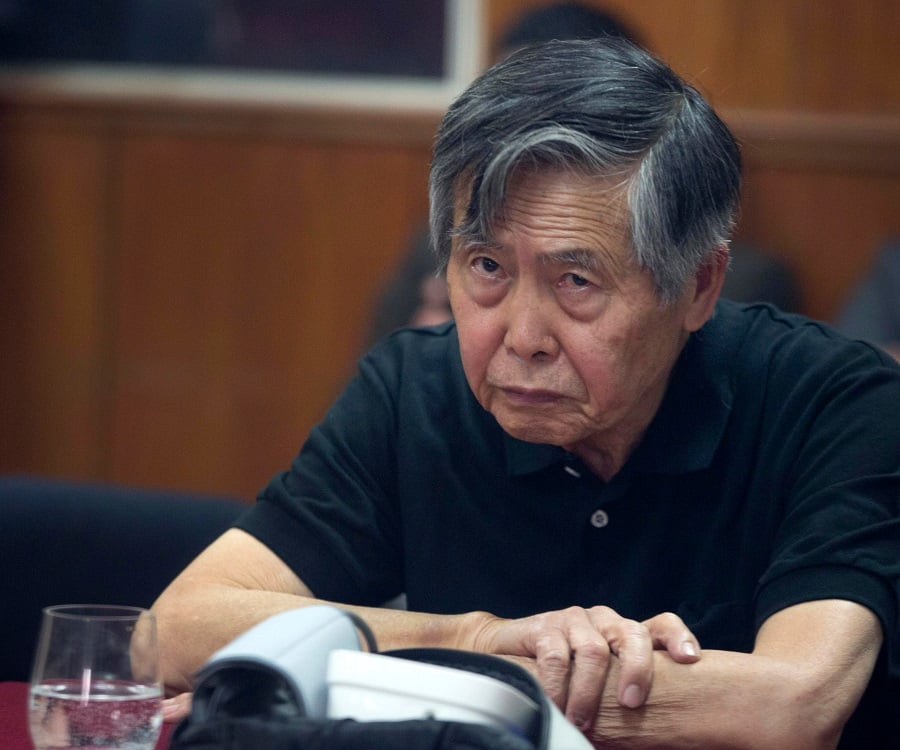
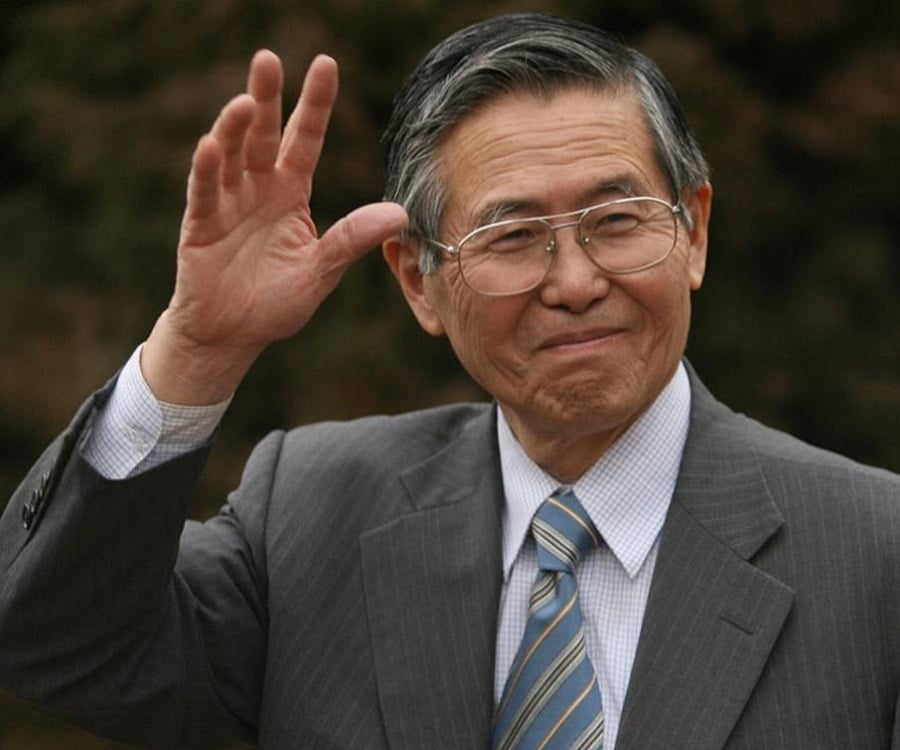
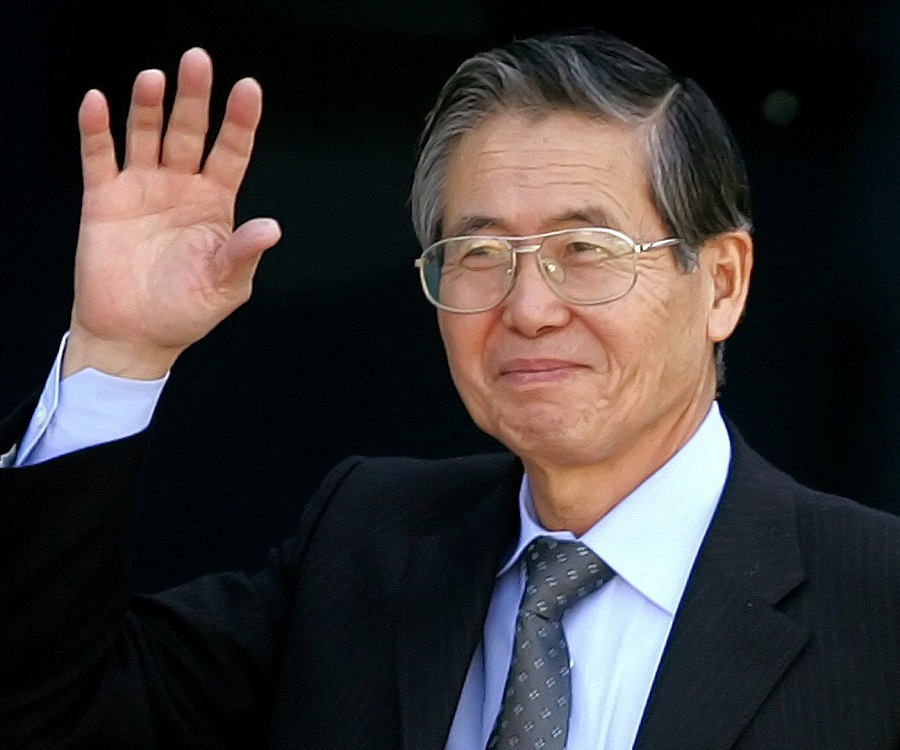
Alberto Fujimori was a former Peruvian politician who went on to become the President of Peru and served in that capacity for nearly a decade. The highly educated Fujimori served as an academician for several years and later contested the presidential elections. His victory was a big surprise and earned him the title of being ‘The first Asian man to become the President of Peru’. Peru was in shambles when Fujimori took over. Few of the great achievements of his administration were stabilising the Peruvian economy by relaxing various trading regulations, and bringing Maoist insurgency under control to a great extent. During his first tenure Fujimori suspended the constitution and carried out a Presidential coup. The coup was severely condemned by the international community but it was widely welcomed by the Peruvian public. Though Fujimori brought a significant change to Peru, he was also widely criticized for his ‘dictatorship’ style of leadership, which also became a reason for his downfall. All the reputation that Fujimori earned through the years was spoilt due to incidents such as forced sterilization of women to control population. Later, it was also revealed that Fujimori was involved in crimes such as drug trafficking and illegal trading of arms and ammunitions. In 2207, Fujimori was tried in court for several offences and was sentenced for 25 years. He was pardoned and released from prison in 2023.
Born In: Lima, Peru
Recommended For You
Also Known As: Alberto Kenya Fujimori Fujimori
Died At Age: 86
Spouse/Ex-: Susana Higuchi
father: Naochi Minami Fujimori
mother: Matsue Inomoto
siblings: Rosa
children: Hiro Alberto, Keiko Sofía Fujimori Higuchi, Kenji Gerardo, Sashi Marcela
Born Country: Peru
political ideology: Sí Cumple, People's New Party
Died on: September 11, 2024
place of death: Lima, Peru
City: Lima, Peru
Recommended For You
Alberto Fujimori was born on 28 July 1938, to Japanese parents named Mutsue Inomoto Fujimori and Naoichi Fujimori. His parents had immigrated to Peru from Japan in 1934. He has three other siblings. Fujimori’s place of birth continues to be a topic of debate. While some sources claim that he was born in Peru, few others say that Japan is his birthplace.
Fujimori completed his primary education from ‘La Rectora’. It was during his time at school that Fujimori learned to speak fluent Spanish. In 1957, he went on to pursue a degree in Agricultural Engineering from ‘Universidad Nacional Agraria La Molina’ and graduated in 1961. After graduation, he worked as mathematics lecturer at the university for a brief time.
Fujimori moved to France in 1964 to study Physics at the prestigious ‘University of Strasbourg’. He went to the University of Wisconsin-Milwaukee’, United States on Ford scholarship and obtained a Master degree in Mathematics, in 1969.
He came back to Peru and joined the Universidad Nacional Agraria. In 1984, Fujimori became the dean of the Universidad Nacional Agraria. He was also appointed as the rector of the university later on, before stepping down in 1989. During the same period he also hosted a show called ‘Concertando’ for the popular TV channel ‘Channel 7’.
Fujimori founded a political party named ‘Cambio 90’ in 1990. He also contested the presidential elections that year as a candidate of the party. Interestingly, the result of the elections turned out to be a huge surprise. Fujimori defeated the hot favourite contender, Mario Vargas Llosa by a considerable margin. Thus, he earned the reputation of being the ‘First man of Asian origin to form the government in a Latin American Nation’.
The first policy which Fujimori implemented as a President was the ‘Fujishock’. Apparently, the governance of Alan Garcia, his predecessor, had left the country in a poor economic state. Fujimori eased a lot of strict trading regulations, and helped Peru become more stable economically.
Fujimori was elected as the President of Peru for a second term in 1995, after defeating Javier Perez de Cuellar, who was the U.N Secretary General, by a thumping margin.
One of the first tasks which the government undertook during 1995 was taking actions against police officers who had violated human rights in the past fifteen years. Fujimori also tried to ease the tensions with neighbouring countries of Ecuador and Chile. A peace treaty was signed between Ecuador and Peru during this period.
Fujimori failed to retain the reputation he had earned during his first term. He clipped the wings of two universities, and removed their autonomous status. This move created Fujimori’s image of being a ‘Dictator’ in the public eye.
According to an operation conducted by intelligence agency Vladimiro Montesinos, between the years 1996 and 2000, Fujimori administration had apparently forced around 300,000 women to undergo sterilisation to control the growing population in Peru.
Fujimori contested presidential elections for the third time in the year 2000. Though he managed to win the contest by a really narrow margin and formed the government, the people protested against his administration. Hence, he was forced to step down.
In 2009, Fujimori was tried by a Peruvian court for several instances of human rights violation. After being proven guilty, the court slapped Fujimori with an imprisonment of 25 years. He was also found guilty of bribing ‘Vladimiro Montesinos’ to expose rich businessmen and bureaucrats, for which the court extended his imprisonment period by seven more years.
Fujimori’s administration was famously known for the ‘Constitutional Crisis of 1992’, one of the most sensational events of modern political history. He suspended the existing Peruvian constitution, with the help of military support, to form new rules. Surprisingly, this move of Fujimori was widely supported by the public. He defended his action by saying that the coup was just a step towards better governance, and to make the nation stronger.
Another major achievement of the government was to control the Maoist insurgency in Peru to a great extent. For a period of fifteen years, before he came to power, Peru was plagued by terrorist attacks and massacres. Fujimori came down hard on insurgency and gave broad powers to military to control this nuisance. This move of Fujimori won a lot of admiration from the public.
In 1974, Fujimori got married to Susana Higuchi, a woman of Japanese origin but raised in Peru, just like him. The couple had four children, amongst them Fujimori’s daughter Keiko followed her father’s footsteps and entered politics.
Fujimori divorced his wife Susana Higuchi in 1994. The divorce happened in public, where the couple washed their dirty linen in front of many people, which damaged Fujimori’s image further. His wife even called him a ‘Tyrant’ and revealed a lot of secrets about the man’s life.
In early 2024, Alberto Fujimori was diagnosed with tongue cancer. He died from complications of tongue cancer on 11 September 2024, at the age of 86.
Alberto Fujimori holds the distinction of being the first person of Japanese descent to become president of a Latin American country.
Fujimori was known for his unconventional approach to diplomacy, including resolving hostage situations by personally negotiating with rebel groups.
He implemented innovative economic policies that helped stabilize Peru's economy during his time in office.
Fujimori was a skilled mathematician and engineer, holding advanced degrees in both fields.
Despite controversy surrounding his presidency, Fujimori remained a polarizing figure in Peruvian politics, with supporters and detractors alike.
How To Cite
People Also Viewed