Famous People Who Died In 1872
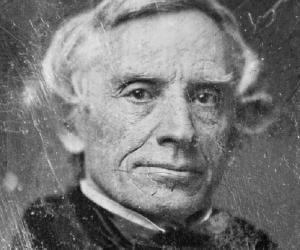
Discover the most famous people died who died in the year 1872. This list includes people like Samuel Morse, Giuseppe Mazzini, Benito Juarez, James Gordon Bennett, Sr., Hugo von Mohl and many more. This list of celebrities is loosely sorted by popularity. People featured on this list, include journalists, political leaders, editors and philosophers who died in 1872. This list includes people from United States and many more countries.
Vote for Your Favourite People Who Died In 1872
Right IconThis ranking is based on an algorithm that combines various factors, including the votes of our users and search trends on the internet.
Birthdate: April 27, 1791
Sun Sign: Taurus
Birthplace: Charlestown, Massachusetts, United States
Died: April 2
Birthdate: March 21, 1806
Sun Sign: Aries
Birthplace: San Pablo Guelatao, Mexico
Died: July 18
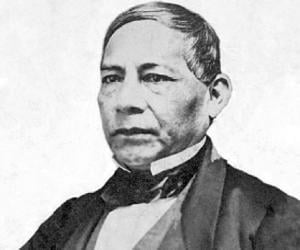
Benito Juarez was a Mexican lawyer and politician. He served as the 26th president of Mexico from 1858 to 1872, becoming the first president of Mexico who was of indigenous origin. He died of a heart attack in 1872. To date, he is revered as "a preeminent symbol of Mexican nationalism and resistance to foreign intervention."
Birthdate: May 16, 1801
Sun Sign: Taurus
Birthplace: Florida, New York, United States
Died: October 10
4
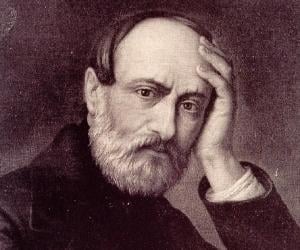
Giuseppe Mazzini(Italian Politician, Activist and Champion of the Movement for Italian Unity)
Birthdate: June 22, 1805
Sun Sign: Cancer
Birthplace: Genoa, Italy
Died: March 10
Giuseppe Mazzini was an Italian journalist, politician, and activist. He played a major role in the Italian revolutionary movement and in the unification of Italy. His efforts gave rise to an independent and unified Italy, which replaced many separate states that were dominated by foreign powers. Mazzini is widely regarded as the most influential European revolutionary.
5
George Meade(American Army Officer Who Decisively Defeated Confederate General Robert E. Lee in the American Civil War)
Birthdate: December 31, 1815
Sun Sign: Capricorn
Birthplace: Cádiz, Spain
Died: November 6
George Meade was a civil engineer and United States Army officer best remembered for decisively defeating Robert E. Lee in the American Civil War. After the war, he played an important role during the Reconstruction era. As a civil engineer, George Meade was involved in the construction of many lighthouses.
Birthdate: February 3, 1811
Sun Sign: Aquarius
Birthplace: Amherst, New Hampshire, United States
Died: November 29
Horace Greeley was an American publisher and newspaper editor. He is credited with founding the New-York Tribune, for which he also served as an editor. He is also credited with popularizing the New-York Tribune, which became the highest-circulating newspaper in America. Long active in politics, Greeley helped found the Republican Party in 1854.
7
Mary Somerville
(Scottish Scientist, Writer and Polymath)
Birthdate: December 26, 1780
Sun Sign: Capricorn
Birthplace: Jedburgh, Scotland
Died: November 29
One of the two pioneering female honorary members of the Royal Astronomical Society, Mary Somerville was a 19th-century polymath and science writer. Though she specialized in math and astronomy, she was also well-versed in botany and geology. The Connection of the Physical Sciences remains her most notable work.
8
Ludwig Feuerbach
(German Philosopher and Anthropologist Best Known for His Work, 'The Essence of Christianity')
Birthdate: July 28, 1804
Sun Sign: Leo
Birthplace: Landshut, Germany
Died: September 13
Ludwig Feuerbach was a German philosopher and anthropologist. He is best remembered for his work, The Essence of Christianity, which strongly influenced generations of future thinkers like Karl Marx, Charles Darwin, Friedrich Engels, and Sigmund Freud among others. Ludwig Feuerbach advocated atheism and his thought was influential in the progression of historical materialism.
Birthdate: December 11, 1830
Sun Sign: Sagittarius
Birthplace: Honolulu, Hawaii, United States
Died: December 11
Birthdate: August 30, 1811
Sun Sign: Virgo
Birthplace: Tarbes, France
Died: October 23
Birthdate: September 1, 1795
Sun Sign: Virgo
Birthplace: Newmill, Scotland
Died: June 1
Birthdate: April 1, 1835
Sun Sign: Aries
Birthplace: Pownal, Vermont, United States
Died: January 7
13
Stanisław Moniuszko
(Polish Composer and Conductor Regarded as the 'Father of Polish National Opera')
Birthdate: May 5, 1819
Sun Sign: Taurus
Birthplace: Ubel', Belarus
Died: June 4
Stanisław Moniuszko was a Polish composer, teacher, and conductor. He is credited with writing several popular operas and art songs with patriotic folk themes that depicted the valor of the people of former Polish–Lithuanian Commonwealth. Thanks to his efforts to glorify the people of Polish–Lithuanian Commonwealth, Stanisław Moniuszko is called the father of Polish national opera.
14
George Catlin
(American Painter, Adventurer, Traveler, Lawyer, and Author)
Birthdate: July 26, 1796
Sun Sign: Leo
Birthplace: Wilkes-Barre, Pennsylvania, United States
Died: December 23
15
Franz Grillparzer
(Austrian Dramatist and Poet Known for Plays Such as 'Der Traum', 'ein Leben' and 'Spartacus')
Birthdate: January 15, 1791
Sun Sign: Capricorn
Birthplace: Vienna, Austria
Died: January 21
Franz Grillparzer had a tough life, with his father dying in debt and his mother having committed suicide. He studied law and then worked as a government clerk before discovering his passion for writing. Known for his tragedies such as Sappho, he became one of the finest Austrian dramatists ever.
16
Princess Feodora of Hohenlohe-Langenburg
(Princess)
Birthdate: July 7, 1839
Sun Sign: Cancer
Birthplace: Stuttgart, Germany
Died: February 10
17
Aleksis Kivi
(Finnish Author Who Wrote the First Significant Novel in the Finnish Language)
Birthdate: October 10, 1834
Sun Sign: Libra
Birthplace: Palojoki, Finland
Died: December 31
Aleksis Kivi, a national writer of Finland, created modern-literary-language of the nation His only novel Seitsemän veljestä is widely-regarded as first significant novel written in Finnish language. He is counted among the earliest and greatest authors of prose and lyrics in Finnish. Another famous work of Kivi, whose birthday is celebrated as Finnish Literature Day, is the play Heath Cobblers.
18
John Frederick Kensett
(Painter)
Birthdate: March 22, 1816
Sun Sign: Aries
Birthplace: Cheshire, Connecticut, United States
Died: December 14
19
Princess Feodora of Leiningen
(Princess)
Birthdate: December 7, 1807
Sun Sign: Sagittarius
Birthplace: Amorbach, Germany
Died: September 23
20
Prince Albert of Prussia
(Prince)
Birthdate: October 4, 1809
Sun Sign: Libra
Birthplace: Königsberg, Germany
Died: October 14
21
Zeng Guofan
(Chinese Military General of the Late Qing Dynasty and Viceroy of Liangjiang (1870 - 1872))
Birthdate: November 26, 1811
Sun Sign: Sagittarius
Birthplace: Shuangfeng, China
Died: March 12
Chinese military general and Confucian scholar Zeng Guofan is best remembered for his efforts in crushing the Taiping Rebellion. Apart from being a court scholar of the Qing rulers, he also served on various prominent boards. His writings have been preserved as a collection of 156 books.
22
Edward James Roye
(Politician)
Birthdate: February 3, 1815
Sun Sign: Aquarius
Birthplace: Newark, Ohio, United States
Died: February 11
Birthdate: March 9, 1806
Sun Sign: Pisces
Birthplace: Philadelphia, Pennsylvania, United States
Died: December 12
24
Francis Lieber
(Jurist and Political Philosopher Who Authored the 'Lieber Code' During the 'American Civil War')
Birthdate: March 18, 1800
Sun Sign: Pisces
Birthplace: Berlin, Germany
Died: October 2
German-American jurist Francis Lieber is best remembered for establishing the laws of war. His Lieber Code, penned during the American Civil War, later served as the basis for the Geneva Conventions. He also penned Encyclopedia Americana and worked as a professor of history and economics in the US.
Birthdate: October 17, 1792
Sun Sign: Libra
Birthplace: Exeter, England
Died: November 23
26
Thomas Sully
(Portrait Painter)
Birthdate: June 19, 1783
Sun Sign: Gemini
Birthplace: Horncastle, England
Died: November 5
27
Ludvonga
(Crown Prince of Swaziland)
Birthdate: 1855 AD
Birthplace: Swaziland
Died: 1872 AD
28
William Wentworth
(Australian Explorer, Pastoralist, Newspaper Editor, Politician, Lawyer, and Author)
Birthdate: August 13, 1790
Sun Sign: Leo
Birthplace: Norfolk Island, Australia
Died: March 20
William Wentworth was an Australian explorer, pastoralist, newspaper editor, politician, lawyer, and author. He was one of the most powerful and wealthiest figures of New South Wales. William Wentworth is credited with founding the Australian Patriotic Association, which is regarded as the first political party in Australia.
Birthdate: February 9, 1837
Sun Sign: Aquarius
Birthplace: Vigan City, Philippines
Died: February 17
Birthdate: December 1, 1813
Sun Sign: Sagittarius
Birthplace: West Grove, Pennsylvania, United States
Died: April 18
31
Cornelius Krieghoff
(Painter)
Birthdate: June 19, 1815
Sun Sign: Gemini
Birthplace: Amsterdam, Netherlands
Died: March 5
Dutch-Canadian painter Cornelius Krieghoff is best known for his depictions of the natural beauty of Canadian landscapes. His romanticized versions of American Indian and Canadian life were later imitated by many. His paintings of winter scenes, such as The Toll Gate and The Blizzard, are appreciated to this day.
32
N. F. S. Grundtvig
(Danish Bishop and Founder of 'Grundtvigianism', a Theological Movement That Revitalized the Danish Lutheran Church)
Birthdate: September 8, 1783
Sun Sign: Virgo
Birthplace: Vordingborg Municipality, Denmark
Died: September 2
N. F. S. Grundtvig was a Danish author, pastor, poet, historian, teacher, philosopher, and politician. By the end of the 19th century, Grundtvig's philosophy had given rise to a new sense of nationalism, for which he is often counted among the most influential Danish people of all time. He is also remembered for promoting values like compassion, wisdom, and equality.
Birthdate: January 8, 1792
Sun Sign: Capricorn
Birthplace: Medfield, Massachusetts, United States
Died: August 11
34
Frederick Denison Maurice
(Theologian)
Birthdate: August 29, 1805
Sun Sign: Virgo
Birthplace: Normanston, England, United Kingdom
Died: April 1
35
John Sandfield Macdonald
(Attorney)
Birthdate: December 12, 1812
Sun Sign: Sagittarius
Birthplace: Glengarry County, Ontario, Canada
Died: June 1
36
Johan Rudolf Thorbecke
(Former Prime Minister of the Netherlands (1871 – 1872, 1862 - 1866, 1849 - 1853))
Birthdate: January 14, 1798
Sun Sign: Capricorn
Birthplace: Zwolle, Netherlands
Died: June 4
One of the most significant 19th-century politicians from the Netherlands, Johan Rudolf Thorbecke led the country as its prime minister. The Liberal Party politician began his career as a lecturer. As a prime minister, he encouraged free trade by abolishing excise duties and built many new canals.
37
Julius Schnorr von Carolsfeld
(Painter)
Birthdate: March 26, 1794
Sun Sign: Aries
Birthplace: Leipzig, Germany
Died: May 24
38
Samuel Bamford
(British Radical Reformer and Poet)
Birthdate: February 28, 1788
Sun Sign: Pisces
Birthplace: Middleton, England
Died: April 13
The son of a weaver, Samuel Bamford quit school and worked as a weaver and a warehouseman. He later penned many poems, expressing his support for the working class. Charged with inciting violence at the Peterloo massacre, he was also jailed for a while. He later became a journalist in London.
39
Ram Singh Kuka
(Philosopher)
Birthdate: February 3, 1816
Sun Sign: Aquarius
Birthplace: Bhaini, India
Died: January 18
40
Félix Archimède Pouchet
(French Naturalist Who Believed in Spontaneous Generation of Life from Non-Living Matter)
Birthdate: August 26, 1800
Sun Sign: Virgo
Birthplace: Rouen, France
Died: December 6
Félix Archimède Pouchet, the father of French naturalist Georges Pouchet, is remembered for his belief in the spontaneous generation of life from non-living matter, a theory that was discarded after Louis Pasteur proved that microorganisms existed in the air. A professor and a naturalist, he penned the iconic work Hétérogénie.
Birthdate: January 19, 1788
Sun Sign: Capricorn
Birthplace: Moscow, Russia
Died: November 26
42
Friedrich Adolf Trendelenburg
(Philosopher)
Birthdate: November 30, 1802
Sun Sign: Sagittarius
Birthplace: Eutin, Germany
Died: January 24
Birthdate: August 31, 1806
Sun Sign: Virgo
Birthplace: Dublin, Ireland
Died: June 1
Birthdate: November 30, 1811
Sun Sign: Sagittarius
Birthplace: Kremenets'kyi, Ukraine
Died: November 9
45
Charles-Eugène Delaunay
(French Astronomer and Mathematician Whose Theory of Lunar Motion Advanced the Development of Planetary-Motion Theories)
Birthdate: April 9, 1816
Sun Sign: Aries
Birthplace: Lusigny-sur-Barse, France
Died: August 5
Charles-Eugène Delaunay was a French mathematician and astronomer, known for his theory of lunar motion, explained in two volumes of La Théorie du mouvement de la lune. A prolific writer, he wrote several other books, which contributed to the development of planetary-motion theories, functional analysis and computer algebra. In his last years, he served as the director of Paris Observatory.
46
Lars Johan Hierta
(Swedish Newspaper Publisher, Businessman and Politician Who was the Founder of the Newspaper 'Aftonbladet')
Birthdate: January 22, 1801
Sun Sign: Aquarius
Birthplace: Uppsala, Sweden
Died: November 20
Lars Johan Hierta was a Swedish businessman, politician, social critic, and newspaper publisher. Best known for founding the popular Swedish daily newspaper Aftonbladet in 1830, Hierta is sometimes referred to as the father of the free press. Lars Johan Hierta is also remembered as an agitator for social and political reform during the 19th century.
47
Jean-Marie Duhamel
(Mathematician)
Birthdate: February 5, 1797
Sun Sign: Aquarius
Birthplace: Saint-Malo, France
Died: April 29
48
Jean-Henri Merle d'Aubigné
(Swiss Historian of the Reformation and Protestant Minister)
Birthdate: August 16, 1794
Sun Sign: Leo
Birthplace: Eaux-Vives, Switzerland
Died: October 21
49
Princess Sophie of Bavaria
Birthdate: January 27, 1805
Sun Sign: Aquarius
Birthplace: Munich, Germany
Died: May 28
50
Henry Bulwer, 1st Baron Dalling and Bulwer
(Politician)
Birthdate: February 13, 1801
Sun Sign: Aquarius
Birthplace: London, England
Died: May 23