Famous 96 Years Old
The list of famous 96 years old includes Pat Robertson, George Soros, Alfred Moisiu, Gary Snyder, Rolf Harris. Famous personalities featured on this list, include actresses, actors, political leaders and educators and from other domains of life. This list of 96 years old includes people from United States, Germany, England & France and many more countries.
Vote for Your Favourite 96 Years Old
Right IconThis ranking is based on an algorithm that combines various factors, including the votes of our users and search trends on the internet.
1
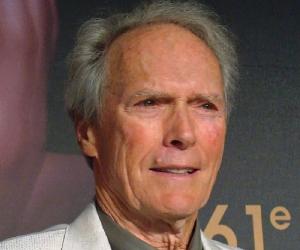
Clint Eastwood(Among the World's Best Known and Most Successful Movie Stars)
Birthdate: May 31, 1930
Sun Sign: Gemini
Birthplace: San Francisco, California, United States
The quintessential Western man in the Hollywood movies, Clint Eastwood is regarded as the cultural icon of masculinity. Eastwood’s brilliant portrayal of tough, rugged, ruthless guy in the Western movies endeared him to the masses and brought him international fame.
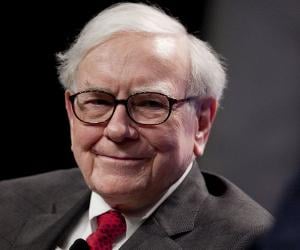
Birthdate: August 30, 1930
Sun Sign: Virgo
Birthplace: Omaha, Nebraska, United States
American investor, business tycoon and philanthropist Warren Buffett is considered one of the most successful investors in the world by the media. The chairman and largest shareholder of the firm, Berkshire Hathaway, he is often called as the ‘Oracle’ or ‘Sage’ of Omaha. Notably, he has pledged to give away a sizable portion of his wealth to philanthropic causes.
3
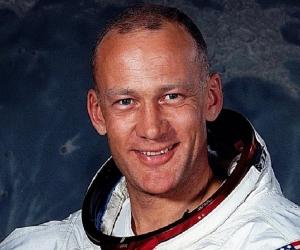
Buzz Aldrin(American Astronaut, Fighter Pilot and the Second Person to Set Foot on the Moon)
Birthdate: January 20, 1930
Sun Sign: Aquarius
Birthplace: Glen Ridge, New Jersey, United States
Buzz Aldrin became the second person to set foot on the Moon, as the pilot of NASA’s Apollo 11 mission, 19 minutes after Neil Armstrong stepped on the Moon, on July 21, 1969. Aldrin has also been a U.S. Air Force officer and flew fighter jets in the Korean War.
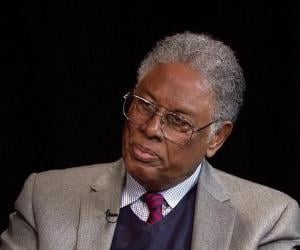
Birthdate: June 30, 1930
Sun Sign: Cancer
Birthplace: Gastonia, North Carolina
One of the few personalities known for his disdain of self-promotion, Thomas Sowell is an important American social theorist and economist. Over the years, he has played a prominent role working as a faculty member of many prestigious universities, such as the University of California, Los Angeles (UCLA) and Cornell University.
5
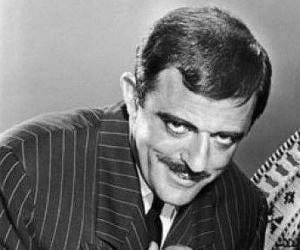
John Astin(Actor and Director Known for His Role as ‘Gomez Addams’ in the TV Series ‘The Addams Family’)
Birthdate: March 30, 1930
Sun Sign: Aries
Birthplace: Baltimore, Maryland, United States
John Astin is best known as Gomez Addams from the 1960s’ series The Addams Family. He was a known face in movies of the horror-comedy/parody genre, such as the Killer Tomatoes films. Some of his other notable films were West Side Story, Freaky Friday, and National Lampoon's European Vacation.
6
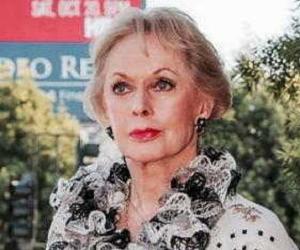
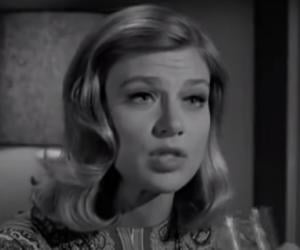
Tippi Hedren
(Famous for Her Roles in the Alfred Hitchcock Movies ‘The Birds’ and ‘Marnie')
Birthdate: January 19, 1930
Sun Sign: Capricorn
Birthplace: New Ulm, Minnesota, United States
Known as a typical Hitchcock Blonde, Tippi Hedren soared to fame with her roles in Alfred Hitchcock’s The Birds and Marnie. An animal rights activist, too, she set up the Roar Foundation and the Shambala Preserve, after witnessing the plight of the animals that are used for shoots.
Birthdate: February 27, 1930
Sun Sign: Pisces
Birthplace: Thomasville, Georgia, U.S.
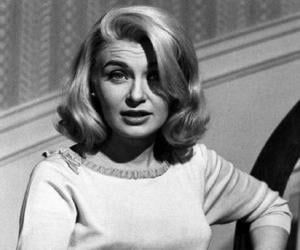
Joanne Woodward is best remembered for her Academy Award-winning performance as three characters in The Three Faces of Eve, and for her multiple award-winning TV projects. The first entertainer to get a Hollywood Walk of Fame “star,” she was also in the news for her marriage to Paul Newman.
8
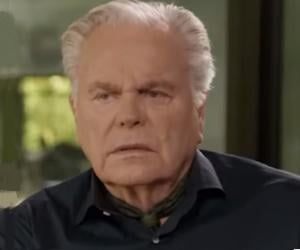
Robert Wagner(Best Known For His Role in the TV Series ‘It Takes a Thief’, ‘Switch’ and ‘Hart to Hart’)
Birthdate: February 10, 1930
Sun Sign: Aquarius
Birthplace: Detroit, Michigan, United States
Best known as Jonathan Hart from the series Hart to Hart, Robert Wagner was scouted while dining at a restaurant. He played memorable roles in projects such as the Austin Powers trilogy and Two and a Half Men. He had multiple affairs, too, which he revealed later, in his autobiography.
9
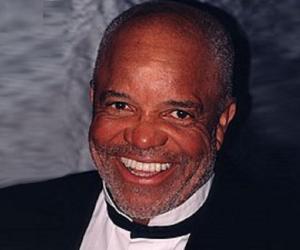
Berry Gordy
(Record Executive)
Birthdate: November 28, 1929
Sun Sign: Sagittarius
Birthplace: Detroit, MichiganDetroit, Michigan, United States
10
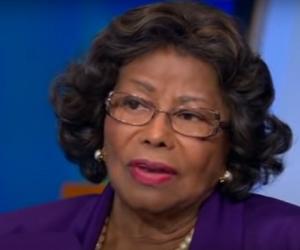
Katherine Jackson
(Musical Talent)
Birthdate: May 4, 1930
Sun Sign: Taurus
Birthplace: Clayton, Alabama, United States
11
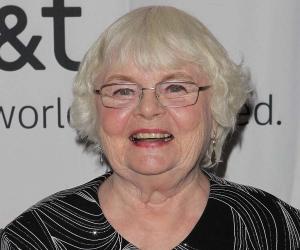
June Squibb
(American actress)
Birthdate: November 6, 1929
Sun Sign: Scorpio
Birthplace: Vandalia, Illinois, United States
Birthdate: August 8, 1930
Sun Sign: Leo
Birthplace: New York, New York, United States
Height: 5'8" (173 cm)
13
Jasper Johns
(Painter, Sculptor, Costume designer)
Birthdate: May 15, 1930
Sun Sign: Taurus
Birthplace: Augusta
Presidential Medal-winning artist Jasper Johns is best known for his contribution to the pop art movement. His paintings revolve around subjects such as flags, numbers, and letters, whereas he has also gained fame for his cast sculpture art such as Painted Bronze. He also once experimented by attaching strings to his art.
14
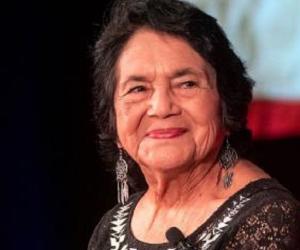
Dolores Huerta
(Trade unionist)
Birthdate: April 10, 1930
Sun Sign: Aries
Birthplace: Dawson
Birthdate: July 20, 1930
Sun Sign: Cancer
Birthplace: St. John's Wood, London, England, UK
Height: 5'6" (168 cm)
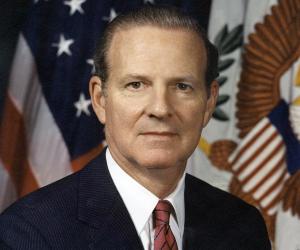
Birthdate: April 28, 1930
Sun Sign: Taurus
Birthplace: Houston, Texas, United States
Attorney James Baker was made the White House chief of staff and then the secretary of the treasury by President Ronald Reagan. He managed George H. W. Bush’s 1988 presidential campaign and became the White House chief of staff under him, witnessing the Gulf War and the Cold War.
17
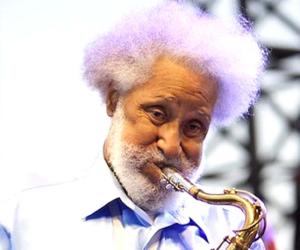
Sonny Rollins
(Saxophonist)
Birthdate: September 7, 1930
Sun Sign: Virgo
Birthplace: New York City
18
Albert S. Ruddy
(Film producer, Screenwriter)
Birthdate: March 28, 1930
Sun Sign: Aries
Birthplace: Montreal
19
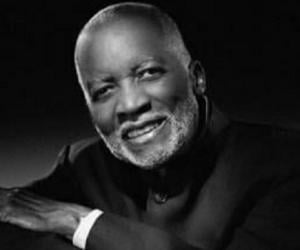
Ahmad Jamal
(Pianist, Composer, Jazz musician)
Birthdate: July 2, 1930
Sun Sign: Cancer
Birthplace: Pittsburgh
Birthdate: March 2, 1930
Sun Sign: Pisces
Birthplace: Knoxville, Tennessee, U.S.
21
Alan Oppenheimer
(Television actor, Film actor, Voice actor, Stage actor)
Birthdate: April 23, 1930
Sun Sign: Taurus
Birthplace: New York City
22
Sue Johanson
(Canadian Public Speaker, Sex Educator, and Registered Nurse)
Birthdate: March 16, 1930
Sun Sign: Pisces
Birthplace: Toronto, Ontario, Canada
23
Vigdís Finnbogadóttir
(President)
Birthdate: April 15, 1930
Sun Sign: Aries
Birthplace: Reykjavík, Iceland
Birthdate: May 8, 1930
Sun Sign: Taurus
Birthplace: San Francisco
Height: 5'3" (160 cm)
Birthdate: June 10, 1930
Sun Sign: Gemini
Birthplace: Newark, New Jersey, United States
26
Frank Drake
(American astronomer)
Birthdate: May 28, 1930
Sun Sign: Gemini
Birthplace: Chicago, Illinois
American astronomer and astrophysicist Frank Drake is best-known for developing Drake equation and for his involvement in search for extraterrestrial intelligence, including founding of modern SETI. He performed Project Ozma, the first SETI experiment for searching signs of life in distant planetary systems. He also designed content of Arecibo message, an interstellar radio message, sent to globular star cluster M13.
27
Haja El Hamdaouia
(Singer)
Birthdate: 1930 AD
Birthplace: Casablanca, Morocco
28
Luce Irigaray
(French Linguist, Psychoanalyst, and Philosopher)
Birthdate: May 3, 1930
Sun Sign: Taurus
Birthplace: Bernissart, Belgium
Luce Irigaray is a Belgian-born French philosopher, feminist, linguist, psychoanalyst, psycholinguist, and cultural theorist. She is best known for her research that examined the role of language in relation to women. Luce Irigaray's 1974 book Speculum of the Other Woman analyzes the texts of Plato, Aristotle, Kant, Freud, Descartes, and Hegel through the lens of phallocentrism.
29
William C. Campbell
(Irish Biologist and Parasitologist Known for His Work in Discovering a Novel Therapy Against Infections Caused by Roundworms)
Birthdate: June 28, 1930
Sun Sign: Cancer
Birthplace: Ramelton, County Donegal, Ireland
Nobel Prize-winning Irish-American biologist William C. Campbell is best known for his pioneering research on the prevention of parasitic infections in humans and other animals. The Trinity College alumnus later studied at the University of Wisconsin and then worked for Merck. He has also been associated with Drew University.
Birthdate: August 1, 1930
Sun Sign: Leo
Birthplace: Badiraguato Municipality
Ernesto Fonseca Carrillo is a convicted Mexican drug lord. He led a now-defunct criminal group called the Guadalajara Cartel alongside Rafael Caro Quintero and Miguel Ángel Félix Gallardo. In 1982, the Drug Enforcement Administration indicted him in a money laundering operation, but he fled back to Mexico where he was finally arrested in 1985.
31
Kasinathuni Viswanath
(Film director, Actor)
Birthdate: February 19, 1930
Sun Sign: Pisces
Birthplace: Repalle
32
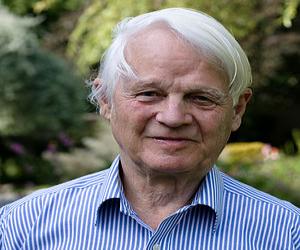
John Polkinghorne
(Physicist, Theoretical physicist)
Birthdate: October 16, 1930
Sun Sign: Libra
Birthplace: Weston-super-Mare
Templeton Prize-winning English theoretical physicist and priest John Polkinghorne championed the relationship between science and religion. He served as Professor of Mathematical Physics at the University of Cambridge before becoming an ordained Anglican priest and later served as president of Queens' College, Cambridge. He penned books like Exploring Reality: The Intertwining of Science and Religion and Questions of Truth.
33
Johan Galtung
(Writer, Sociologist)
Birthdate: October 24, 1930
Sun Sign: Scorpio
Birthplace: Oslo, Norway
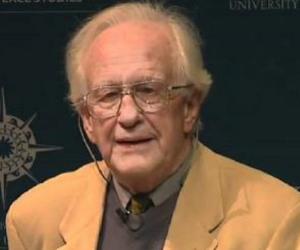
Johan Galtung is a Norwegian sociologist best known as the founder of a social science field called peace and conflict studies. He is also credited with founding the Peace Research Institute Oslo where he served as the director from 1959 to 1970. Renowned for his contribution to political science, economics, and history, Galtung won the Right Livelihood Award in 1987.
34
John Adams Morgan
(Sailor and Olympic Champion)
Birthdate: September 17, 1930
Sun Sign: Virgo
Birthplace: Oyster Bay, New York, United States
35
Jacques Tits
(Belgian-Born French Mathematician Who Worked on 'Group Theory' and 'Incidence Geometry')
Birthdate: August 12, 1930
Sun Sign: Leo
Birthplace: Uccle
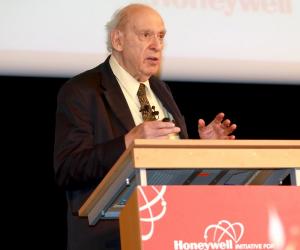
Belgian-born French mathematician Jacques Tits was the son of a mathematician and professor and grew up to develop the geometric coding of the algebraic structure of linear groups through Tits buildings. He has won scores of awards, including the prestigious Wolf Prize and the Abel Prize.
Birthdate: March 28, 1930
Sun Sign: Aries
Birthplace: Chicago, Illinois
37
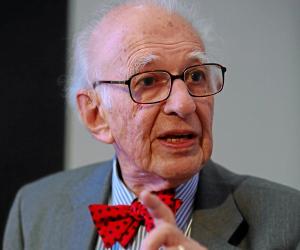
Eric Kandel
(Neurologist, Psychiatrist, Neuroscientist, Psychologist, Biochemist)
Birthdate: November 7, 1929
Sun Sign: Scorpio
Birthplace: Vienna
Nobel Prize-winning neurobiologist Eric Kandel is known for his research on the role of synapses in memory and learning. An Austrian Jew, he left his country with his family and moved to the U.S. in the wake of anti-Semitism. A doctor, specializing in psychiatry, he later taught at Columbia University.
38
Richard Lynn
(psychologist, university teacher)
Birthdate: 1930 AD
Birthplace: Bristol
39
Ivan Silayev
(Politician, Engineer)
Birthdate: October 21, 1930
Sun Sign: Libra
Birthplace: Nizhny Novgorod Oblast
40
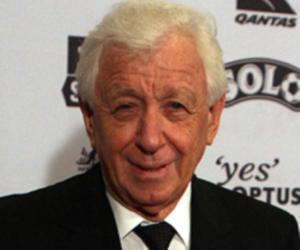
Frank Lowy
(Businessperson)
Birthdate: October 22, 1930
Sun Sign: Libra
Birthplace: Fiľakovo, Slovakia
41
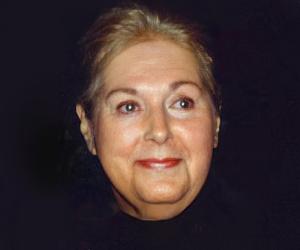
Marilyn Bergman
(Composer)
Birthdate: November 10, 1929
Sun Sign: Scorpio
Birthplace: Brooklyn, New York, United States
42
Matthew Meselson
(American Geneticist and Molecular Biologist Known for His Demonstration of 'Semi-conservative DNA Replication')
Birthdate: May 24, 1930
Sun Sign: Gemini
Birthplace: Denver, Colorado, United States
Molecular biologist and geneticist Matthew Meselson is best known for his research on the Watson-Crick theory and the replication of DNA. The Harvard professor has received accolades such as the Guggenheim Fellowship and honorary degrees from eight universities, including Princeton and Yale. He has also been a CIA consultant.
43
Ahmed Zaki Yamani
(Saudi Arabian Politician and Former Minister of Petroleum and Mineral Resources (1962 - 1986))
Birthdate: June 30, 1930
Sun Sign: Cancer
Birthplace: Mecca
Ahmed Zaki Yamani was a Saudi Arabian politician. He is best remembered for his service as the Minister of Petroleum and Mineral Resources from 9 March 1962 to 5 October 1986. Ahmed Zaki Yamani is credited with founding a market analysis group called the Centre for Global Energy Studies in 1990.
Birthdate: October 10, 1930
Sun Sign: Libra
Birthplace: Slab Fork, West Virginia
45
Martin Karplus
(Nobel Prize-Winning Austrian-American Theoretical Chemist)
Birthdate: March 15, 1930
Sun Sign: Pisces
Birthplace: Vienna, Austria
Nobel Prize-winning Austrian-American theoretical chemist Martin Karplus has been associated with Harvard University as a professor of chemistry. The Vienna-born scientist had escaped the Nazis to move to the US. Best known for developing multiscale models for complex chemical systems, he has also worked at Columbia University and the University of Strasbourg.
Birthdate: May 24, 1930
Sun Sign: Gemini
Birthplace: Toronto
Robert Bateman is a Canadian painter and naturalist renowned for his realistic painting style that reflects his appreciation for nature. He is credited with establishing the Bateman Foundation, which aims at educating people on the prominence of human-nature connection. Over the course of his career, Bateman has been honored with several awards like Society of Animal Artists Award of Excellence.
Birthdate: January 28, 1930
Sun Sign: Aquarius
Birthplace: Hisar
48
Carmen Sevilla
(Actress, Singer)
Birthdate: October 16, 1930
Sun Sign: Libra
Birthplace: Seville, Spain
Height: 5'4" (163 cm)
49
Pete Carril
(Basketball coach, Basketball player)
Birthdate: July 10, 1930
Sun Sign: Cancer
Birthplace: Bethlehem, Pennsylvania, United States
50
Theodore McCarrick
(Priest)
Birthdate: July 7, 1930
Sun Sign: Cancer
Birthplace: New York City, United States
Theodore McCarrick is a former cardinal and laicized bishop of the Catholic Church. He became the first cardinal to resign from the College of Cardinals because of sexual abuse claims in July 2018. Known as a champion of progressive Catholicism and social justice causes, McCarrick was found guilty of sexual crimes and abuse of power. He was dismissed from clergy in 2019.