Friedrich Nietzsche Childhood & Early Life
Friedrich Nietzsche was born on October 15, 1844 in Röcken, near Leipzig, in the Prussian Province of Saxony, which is now in Germany. His father, Carl Ludwig Nietzsche was a Lutheran pastor and former teacher. His mother’s name was Franziska Oehler. Friedrich Nietzsche had two siblings, a sister, Elisabeth Förster-Nietzsche and a younger brother, Ludwig Joseph. His father died with a minor brain ailment in 1849 when Nietzsche was barely five. His younger brother died the following year. After the death of his younger brother, the family moved to live with Nietzsche's paternal grandmother. In year 1856, his grandmother died and the family had to move back to their own house.
Friedrich Nietzsche first attended his primary education in a boy’s school and then, moved to a private school. It was here, he became friends with Gustav Krug, Rudolf Wagner and Wilhelm Pinder who were from respected families. In the year 1854, Nietzsche began to attend Pforta in Naumburg. But he did not stay there for long as no sooner did he show particular talents in music and language, he was admitted in the internationally-renowned first-rate boarding school, Schulpforta. During his stay in Schulpforta from 1858 to 1864, he was acquainted with Paul Deussen and Carl von Gersdorff. In Schulpforta, he was exposed to ancient Greek and Roman literature. He also worked on poems and music compositions during this time.
After passing out from Schulpforta, Friedrich Nietzsche joined the University of Bonn in 1864 as a theology and philology student. Very soon his interest gravitated towards philology and he dropped from theology after one semester. It was also said that Nietzsche had lost faith due to partial influence of David Strauss's “Life of Jesus”. He started concentrating on his philological studies under the guidance of Professor Friedrich Wilhelm Ritschl, whom he followed to the University of Leipzig. It was during this time that Nietzsche's first philological publication was released.
Inspired by Arthur Schopenhauer’s “Die Welt als Wille und Vorstellung” in 1865, Nietzsche found himself attracted to philosophy. Arthur Schopenhauer was one of the few thinkers whom he really admired and had thoroughly read his works. Nietzsche’s interest in philosophy strengthened after reading Friedrich Albert Lange's “History of Materialism”. Lange’s descriptions about the rise of European materialism, Kant’s anti-materialistic and other theories pushed him more towards philosophical studies. The favorable cultural environment of that time also propelled his interest in philosophy. In 1867 he was inducted in Prussian artillery division in Naumburg for one year of voluntary service. But after a horse accident in March 1868, he had to leave the service. Nietzsche rejoined his studies.
Career
Nietzsche left his Prussian citizenship before moving to Basel and remained stateless for his rest of life. He received a striking offer to become professor of classical philology at the University of Basel. Nietzsche, at that time neither had a teaching certificate nor had completed his doctorate. Accepting this offer made him one of the youngest tenured Classics professors on record. He also served in the Prussian army during the Franco-Prussian War of 1870 to 1871 as a medical orderly. In his short military service, he experienced the trauma and tragedies related to war. It was also believed that during this period, he was contracted with diphtheria, dysentery and syphilis.
Coming back to Basel, Nietzsche met Franz Overbeck, a professor of theology, who remained his friend for life, Afrikan Spir, a Russian philosopher and his historian colleague Jacob Burckhardt. The year 1872 witnessed the publication of his first book, “The Birth of Tragedy”. This book garnered mixed reviews; his colleagues at philological community mocked on his effort whereas his friends, Wagner and Rhode backed him. In the period of 1873 to 1876, Nietzsche published his four long essays, “David Strauss: the Confessor and the Writer”, “On the Use and Abuse of History for Life”, “Schopenhauer as Educator”, and “Richard Wagner in Bayreuth”. All of them shared the orientation of a cultural critique, challenging the developing German culture as suggested by Schopenhauer and Wagner.
In 1878, Nietzsche published, “Human, All Too Human” which dealt with a wide range of themes, right from metaphysics to morality and from religion to sexes. The book clearly showcased his rift from the pessimistic philosophy of Wagner and Schopenhauer. His friendship with Deussen and Rohde also hit a rough patch during this time. Meanwhile, Nietzsche’s health was taking a downside further. Since childhood, he was affected with a number of disruptive diseases such as shortsightedness, migraine and indigestion. The accident that occurred in 1868 further aggravated the problem. Thus, following his significant decline in health, Nietzsche had to leave his post in Basel. He was given pension from University of Basel.
Later Life
Nietzsche’s frequent illness and prolonged health problems forced him to look for favorable climates suitable for his health. He traveled to many cities and worked as independent author until 1889. Occasionally, he returned back to his family in Naumburg. For livelihood, he had to rely on his pension from Basel with frequent aids from friends. In 1882, Nietzsche published the first part of “The Gay Science”. In the same year, he met Lou Andreas Salomé, who was considered as the love interest of Nietzsche. Even the two spent a summer together in Tautenburg in Thuringia. His relationship with Lou Andreas Salomé ended in the winter of 1882/1883 after the intrusion of his sister Elisabeth.
He finished his first part of “Thus Spoke Zarathustra” during this period. However, his work was not too well-received by people. Despite the fact, he continued to write and came out with the second and the third edition of Zaruthustra. In 1883, Nietzsche tried to get a lecturing post in University of Leipzig but was rejected for his anti-Christian faith. He understood that his concept of God based on his book Zarathustra made him unemployable at every German University. Nevertheless, this did not stop Nietzsche and in 1885, he came up with the fourth edition of Zaruthustra but only 40 copies of the same were printed, which he distributed to his close friends.
The following year, in 1886, Nietzsche and his publisher, Ernst Schmeitzner, rubbed each other wrongly on the grounds of the latter’s anti-Semitic opinions. As such, Nietzsche self published his book “Beyond Good and Evil”. During this time, in 1886-87, he brought out the second edition of his earlier works second editions of his earlier works “The Birth of Tragedy”, “Human, All Too Human”, “Dawn”, and “The Gay Science”. The succeeding year he wrote the polemic “On the Genealogy of Morals”. In 1888, Nietzsche came up with two other works titled “Twilight of the Idols” and “The Antichrist”. That summer his health showed considerable improvements and his higher spirits were seen in his subsequent writings like “The Case of Wagner”.
Death
Nietzsche suffered a major mental collapse on January 3, 1889. After his mental collapse, he wrote many “Madness Letters”, also known as “Wahnbriefe” which he subsequently sent to his friends. He was taken to a psychiatric clinic in Basel and later was shifted to a clinic in Jena under the direction of Otto Binswanger. After the ineffective treatment of his mental illness, his mother Franziska decided to take him back to home and Nietzsche returned home in May 1890. After the death of his mother in 1897, his sister took care of him who had already returned from Nueva Germania in 1893. He suffered two strokes consecutively in 1898 and 1899 which partially paralyzed him and he was unable to speak or walk. During mid-August 1890, Nietzsche contracted pneumonia which worsened his condition. Nietzsche suffered a stroke during midnight of August 24/25 and was declared dead by noon on August 25. | |||||
Friedrich Nietzsche Timeline: | |||||
1844: Friedrich Nietzsche was born in Röcken, Prussia.
1849: His father died due to a minor brain ailment
1850: Younger brother expired
1854: Attended Pforta in Naumburg.
1858: Was admitted in Schulpforta, near Naumburg.
1864: Graduated from Schulpforta.
1864: Joined the University of Bonn as a theology and philology student
1865: Was attracted to philosophy.
1867: Was inducted in Prussian artillery division in Naumburg
1868: Met with an accident and thus, left the service and rejoined his studies
1869: Appointed as a professor of classical philology at the University of Basel.
1870-71: Served in the Prussian army during the Franco-Prussian War
1872: Published his first book, “The Birth of Tragedy”.
1873-76: Nietzsche published his four long essays, “David Strauss: the Confessor and the Writer”, “On the Use and Abuse of History for Life”, “Schopenhauer as Educator”, and “Richard Wagner in Bayreuth”.
1878: Published, “Human, All Too Human”
1882: Published the first part of “The Gay Science”; Met Lou Andreas Salomé.
1883: Tried to get a lecturing post in University of Leipzig but was rejected for his anti-Christian faith.
1885: Came up with the fourth edition of “Zaruthustra”
1886-87: Brought out the second edition of his earlier works second editions of his earlier works “The Birth of Tragedy”, “Human, All Too Human”, “Dawn”, and “The Gay Science”.
1887: Wrote the polemic “On the Genealogy of Morals”.
1888: Came up with two other works titled “Twilight of the Idols” and “The Antichrist”.
1889: Suffered a major mental collapse on January 3.
1890: Suffered a stroke in midnight of August 24/25 and was declared dead by noon. |
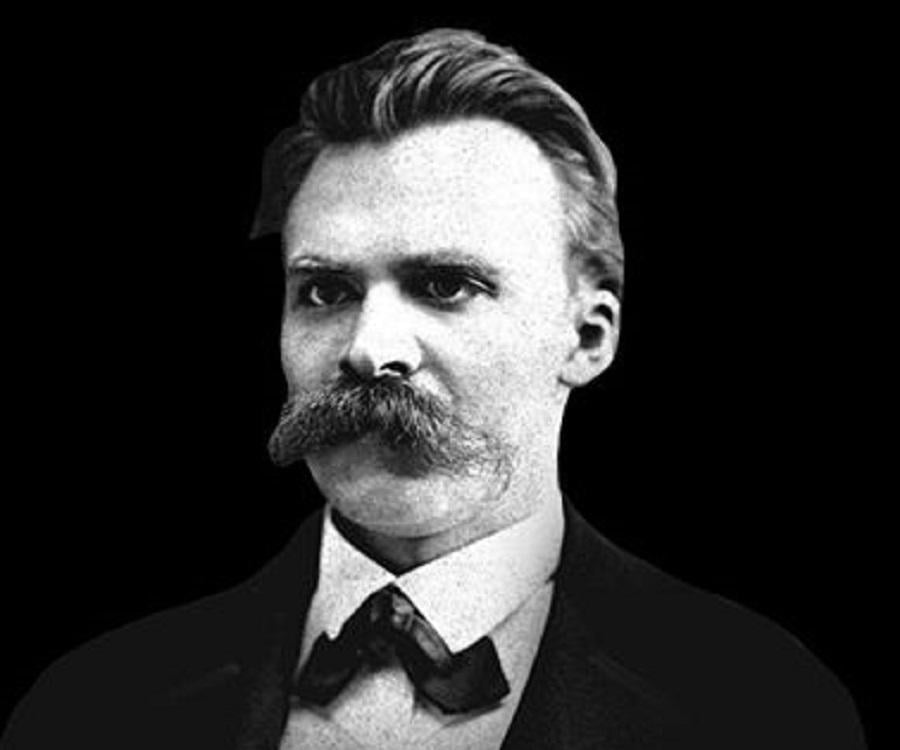
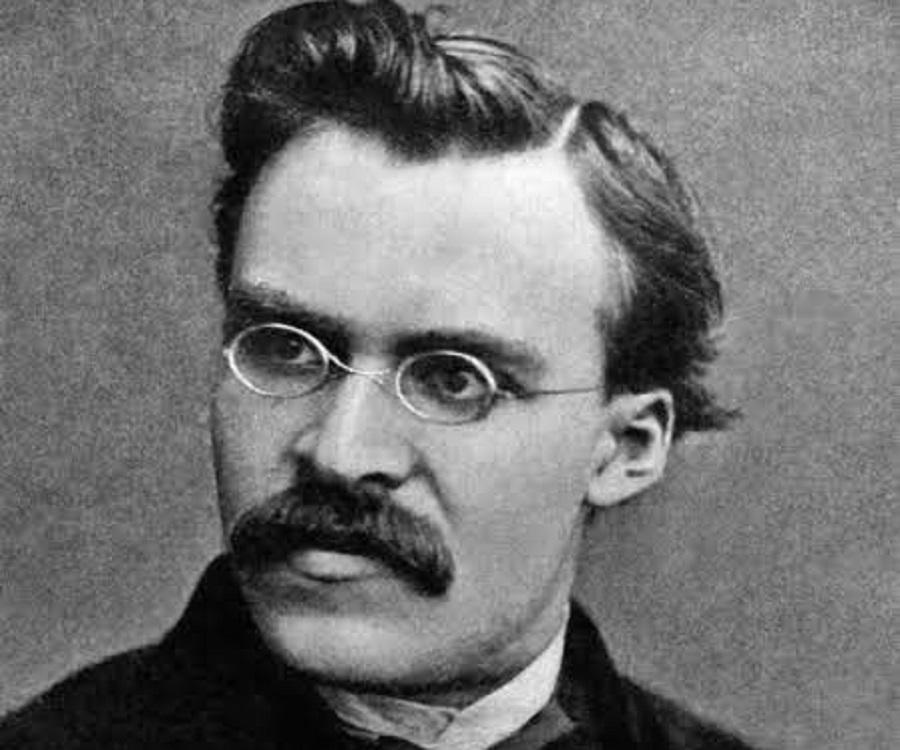
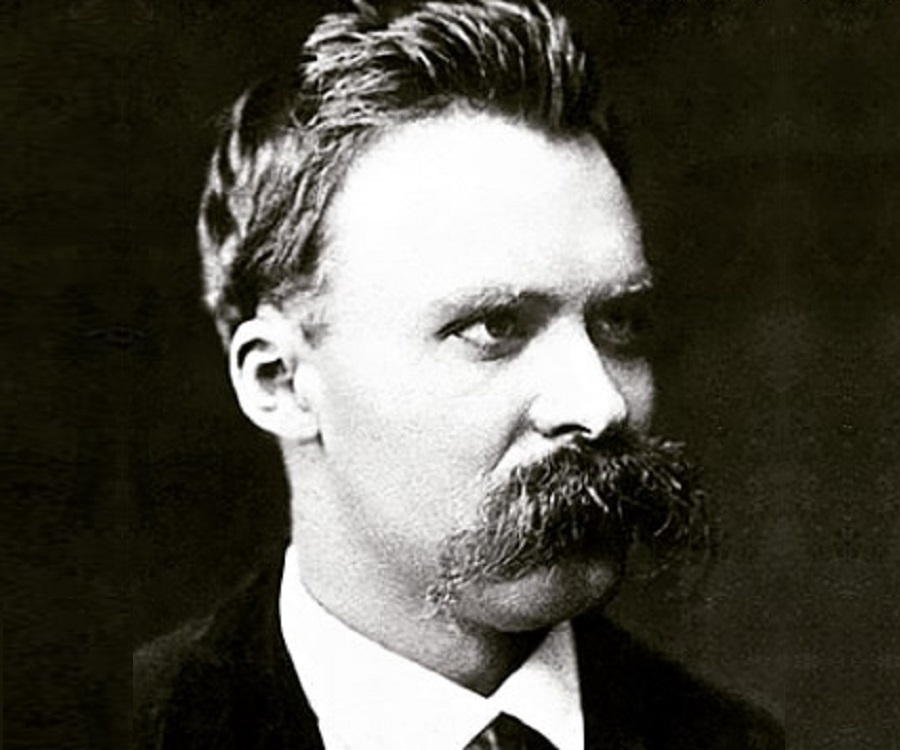
Friedrich Nietzsche was a German philologist and philosopher, known for his controversial writings. Read more about him and his journey as a philosopher in this article.
Famous People» Philosophers» Friedrich Nietzsche
Friedrich Nietzsche |
|
| Famous as | Philosopher and Philologist |
| Born on | 15 October 1844 |
| Born in | Röcken, near Leipzig |
| Died on | 25 August 1900 |
| Nationality | Germany |
| Works & Achievements | Became the youngest professor of Classical Philology at the University of Basel, Wrote books like "The Birth Of Tragedy", "Thus Spoke Zarathustra", "The Antichrist", "The Gay Science", "Human, All Too Human", "The Case of Wagner" |
|