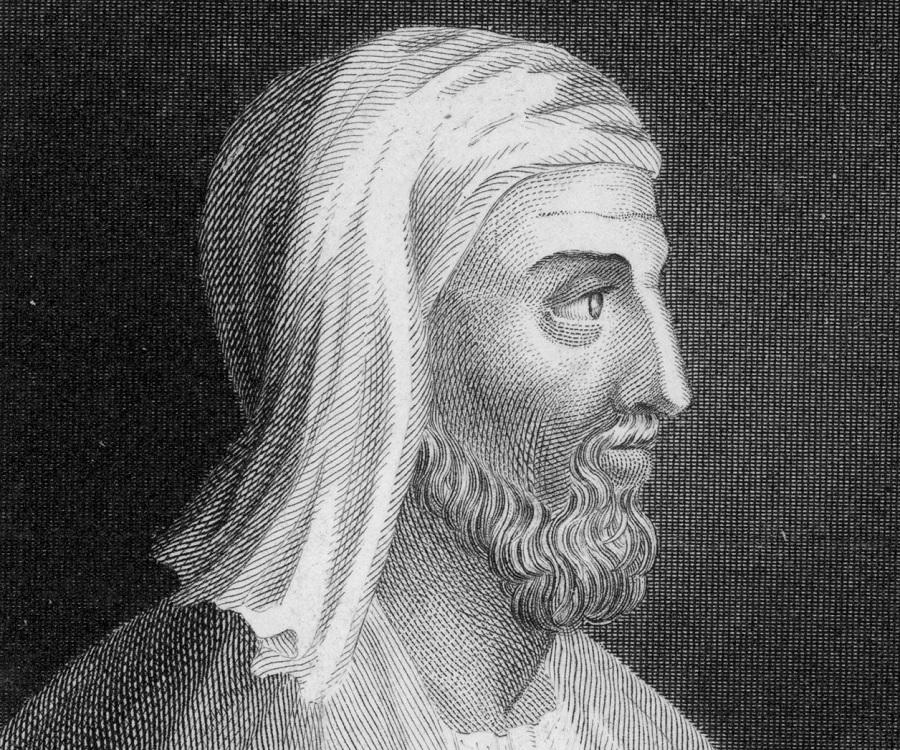
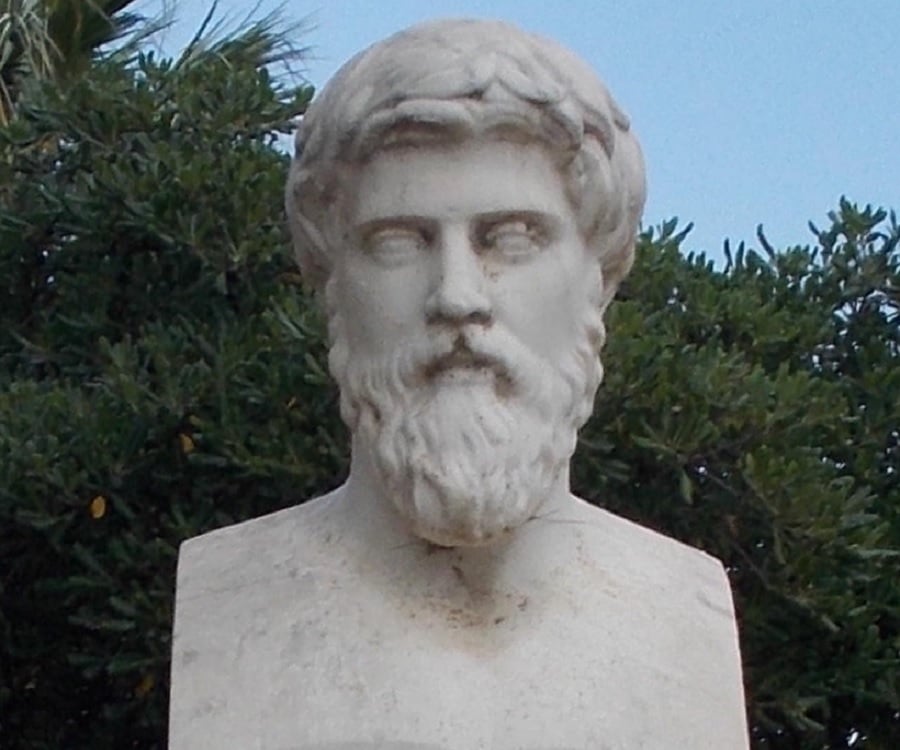
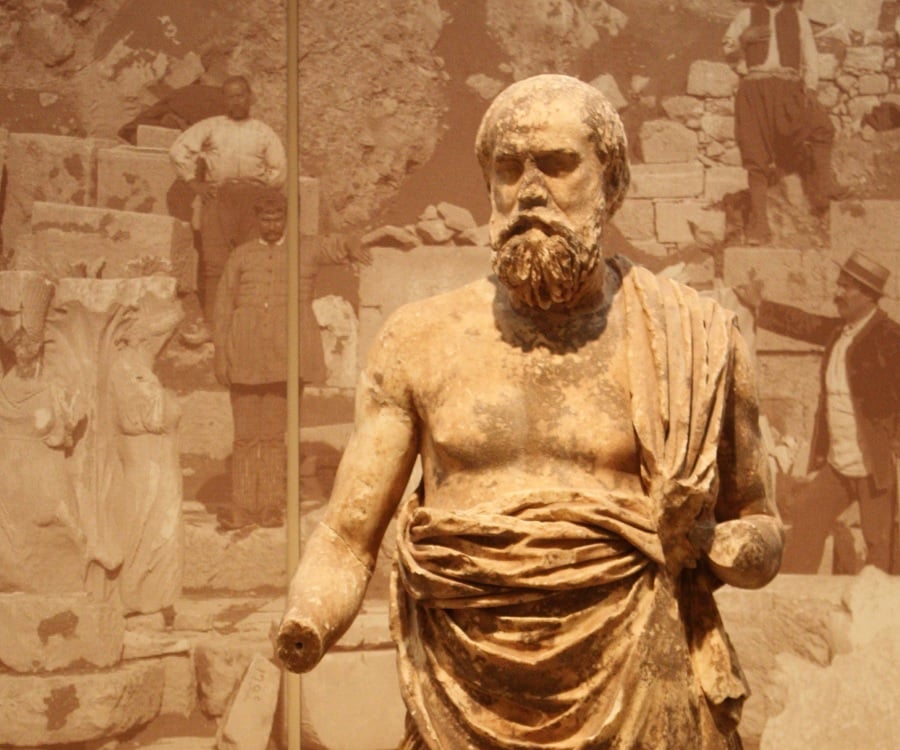
Plutarch was a famous Greek historian and biographer who wrote known works like “Parallel Lives” and “Moralia”. Read more about this earliest moral philosopher in the following article.

Plutarch

PrintRecommend This Site
Famous as Philosopher, Historian, Biographer, Essayist, & Middle Platonist
Born on 2046 AD
Born in Chaeronea, Boeotia
Nationality Greece
Works & Achievements Wrote famous works like "Parallel Lives" and "Moralia".

Plutarch was a Greek historian, biographer, essayist, and Middle Platonist, known for his famous works, "Parallel Lives" and "Moralia". "Parallel Lives" was a series of biographies written by him, which recorded the lives of famous Greeks and Romans. He covered them in pairs so as to highlight their common moral virtues and vices. Some of the popular names covered were Alexander the Great, Pyrrhus of Epirus, Romulus, Numa Pompilius, Coriolanus, Aemilius Paullus, Julius Caesar, Cicero, Mark Antony, and Marcus Junius Brutus. Plutarch can be considered as one of the earliest moral philosophers for his commendable effort of comparing the physical appearances and moral character. His other work, "Moralia" is a collection of his essays and speeches. Plutarch's works are great references to the Roman and Greek history and gives knowledge about the life and culture of that time. His writings had a great impact on English and French Literature and influenced some of great writers and thinkers like Shakespeare, Ralph Waldo Emerson, Francis Bacon, Cotton Mather and Robert Browning.

Plutarch Childhood & Early Life
Plutarch was born in 46 CE in the small town of Chaeronea, Boeotia. His father’s name was Nikarchus, while Lamprias was his grandfather. Plutarch’s family was well-off financially and was amongst the wealthy families of the region. He had two brothers, Timon and Lamprias. From the time period between 66 CE to 67CE, Plutarch studied mathematics and philosophy at the Academy of Athens under Ammonius. He had couple of influential friends, who later became senators such as Quintus Sosius Senecio and Fundanus. Plutarch traveled widely towards the Mediterranean world which included central Greece, Sparta, Corinth, Patrae (Patras), Sardes and Alexandria. It was during this time that he took Roman citizenship and took the name, Lucius Mestrius Plutarchus. He spent major part of his life at Chaeronea, worshiping the Greek god Apollo at the Oracle of Delphi. During his duties as the senior priest at Oracle of Delphi, Plutarch produced extensive writing works. His writings and lectures made him famous in Roman Empire. Even though he resided prominently at his birth place only, being a mayor, he had to actively take part in various local affairs of the city. Guests from all over the empire used to accumulate at his place and discuss serious conversations
 
Later Life and Works
Apart from being the priest of the Delphic temple, Plutarch served as a magistrate in Chaeronea. During his post as a magistrate, he represented his home in many countries. He also held the position of archon in his local municipality. As said by the 10th century historian George Syncellus, Plutarch was appointed as the nominal procurator of Achaea by Emperor Hadrian. The first major work written by Plutarch was the “Lives of the Roman Emperors”, from Augustus to Vitellius. These early biographies of the Roman Emperors were published during the reign of Nerva between 96-98 CE. His best known work, “Parallel Lives” was a series of biographies of famous Greeks and Romans. During his writing of “Parallel Lives”, Plutarch was not much concerned with the history as compared to the influence of the character, good or bad on the lives and destinies of men. He concentrated more of his focus on the charming anecdotes and incidental trivialities. Plutarch must be called as one of the ancient moral philosophers for his tremendous effort to draw parallel lines between moral character and physical appearance.
 
Few earlier written Lives such as those of Heracles, Philip II of Macedon and Scipio Africanus no longer exists. Many of the remaining lives have been truncated, have gaps or were tampered by later writers. Some of the extant lives are those of Solon, Themistocles, Aristides, Pericles, Alcibiades, Nicias, Demosthenes, Pelopidas, Philopoemen, Timoleon, Dion of Syracuse, Alexander the Great, Pyrrhus of Epirus, Romulus, Numa Pompilius, Coriolanus, Aemilius Paullus, Julius Caesar, Cicero, Mark Antony, and Marcus Junius Brutus. The balance of his surviving works is collected under the title, “Moralia”. It is a collection of seventy-eight essays and canned speeches that includes topics like “On Fraternal Affection” which is a revelation on honor and affection of siblings towards each other. His essay, “On the Fortune” or the “Virtue of Alexander the Great” is an important adjunct to Alexander’s life as the great king. This title also contained some of his philosophical treatises such as “On the Decline of the Oracles”, “On the Delays of the Divine Vengeance”, “On Peace of Mind”. It also included “Odysseus and Gryllus” which was a humorous dialogue between Homer's Odysseus and one of Circe's enchanted pigs. It was believed that “Moralia” was written first whereas the “Parallel Lives” took the last two decades of his life.
 
His Philosophy
Plutarch was a Platonist but was influenced by Peripatetics and to some level by Stoicism. However, he totally rejected the Epicurean Philosophy. He gave little importance to the practical questions, but doubted on the possibility of solving them, probably because of his more interest towards religious and moral questions. Based on his similar views to Plato, he had a pure idea of God hence opposing towards the Stoic materialism and Epicurean “atheism”. He had a second principal to explain the phenomenal world. He said that the evil world soul was originally filled with reason and was arranged by it. It was later transformed into the divine soul of the world but hadn’t stopped operating as the source of all evil. He placed the god above the finite world and daemons became God’s agent in the world. He emphasized on the freedom of the will and immorality of the soul. One of the main characteristics of Plutarch’s ethics was its close connection with religion. Perhaps, Plutarch had a pure idea about God but his views about the vice and the corruption related to superstitions was more vivid. He had similar attitude towards the popular religion. He believed that Gods of different people have different names of the same Supreme Being. He had combined the philosophical and the religious conception of things to remain close to tradition.
 
Influence
Plutarch’s writings had a heavy influence on the English and French Literature. Various famous writers and poets studied his works and drew inspiration from them. The famous English writer William Shakespeare used some translated part of Plutarch’s book “Lives” in his plays and occasionally used quotes from it. Transcendentalists, especially Ralph Waldo Emerson, were greatly influenced by his work, “Moralia”. Emerson even called Lives as the “a Bible of heroes”. Montaigne's own “Essays” was highly influenced by “Moralia” and was written on the lines of the Greek’s easy and rambling enquires into science, manners, customs and beliefs. Other noted admirers of Plutarch’s work were, Ben Jonson, John Dryden, Alexander Hamilton, John Milton, Francis Bacon, Cotton Mather and Robert Browning.
 
Personal Life
Plutarch’s wife's name was Timoxena. He perhaps had a daughter with name, Timoxena who died in infancy. He had two sons, Autobulus and Plutarch.

Plutarch
Plutarch

Plutarch Timeline:
46: Born in Chaeronea, Boeotia.
66-67: Studied mathematics and philosophy at the Academy of Athens.
96-98: Biographies of Roman Emperors was published.
120: Died in Delphi, Phocis.

PrintRecommend This Site