Langston Hughes Childhood and Early Life
Langston Hughes was born on February 1, 1902 in Joplin, Missouri, United States. His parents were Carrie (Caroline) Mercer Langston and James Nathaniel Hughes. Following the separation of his parents, Langston was raised by his maternal grandmother Mary Patterson Langston in Lawrence, Kansas. Meanwhile, his mother was traveling seeking employment. He spent majority of his childhood years in Kansas only. After the death of his grandmother, Langston had to live with family friends, James and Mary Reed for two years. This unstable early life shaped the mind of Langston into a poetic frame. After his mother remarried, he went to live with his mother in Lincoln, Illinois. While studying in the grammar school in Lincoln, Illinois, Langston was elected as the class poet. In his high school, Langston wrote for the school newspaper and edited the yearbook. It was during this time when he started writing poetry, short stories and dramatic plays. His first piece of jazz poetry, “When Sue Wears Red” was written during this period. Meanwhile Langston became interested in reading books. American poets Paul Laurence Dunbar and Carl Sandburg had significant impact on his poetry. He graduated from high school in June 1920. Langston returned to Mexico to his father in hope to convince the latter to support his plan of getting into Columbia University. His father, however, wanted him to study in a university abroad and pursue a career in engineering. He was ready to support financially only if Langston agreed to study engineering. The two finally came to a compromise where Langston could attend Columbia but as an engineering student. While at Columbia in 1921, Langston maintained a grade average of B+, but left the same in 1922 following racial prejudice.
Later Life
After leaving Columbia, Langston worked in various odd jobs. He then served a brief tenure as a crewman aboard the S.S. Malone in 1923. During his tenure he traveled six months to Europe and West Africa. While in Europe, he left S.S. Malone and temporarily stayed in Paris. In his early 1920s stay in England, he was a part of the black expatriate community. In November 1924, Langston returned to live with his mother in Washington D.C. Again, he did a series of odd jobs before actually getting an appropriate white color job in 1925. Langston became the personal assistant to the historian Carter G. Woodson at the Association for the Study of African American Life and History. Since the work of personal assistant demanded much attention hence limiting his time for poetry, he left the job to work as a busboy in a local hotel. He met the poet Vachel Lindsay during this time. Vachel was impressed by Langston’s poetry and publicized him as the new black poet. The next year, Langston took admission in Lincoln University, a historically black university in Chester County, Pennsylvania. He also joined Omega Psi Phi Fraternity which was a black fraternal organization founded at Howard University in Washington, D.C. Hughes received his B.A. degree from Lincoln University in 1929 and returned to New York. For some brief time periods, he traveled to the Soviet Union and parts of the Caribbean. Harlem was his primary home for the rest of his life. During 1930s, he also lived in Westfield, New Jersey. Some academics and biographers believed that he was homosexual and preferred African-American man in work and life. While some biographers like Arnold Rampersad stated that Hughes was asexual and passive in sexual relationships.
Literary Works
In 1921, The Crisis published Langston’s first poem, “The Negro Speaks of Rivers”, which became his signature poem. This poem was also collected in his first book of poetry, The Weary Blues (1926). Langston’s life and literary works were greatly influenced by the 1920s Harlem Renaissance. His contemporaries included, Zora Neale Hurston, Wallace Thurman, Countee Cullen, Richard Bruce Nugent, and Aaron Douglas. They even together created a short lived magazine, “Fire!! Devoted to Younger Negro Artists”. Hughes encouraged racial consciousness and cultural nationalism across the globe and stressed on pride in their diverse black folk culture and black aesthetic. He was one of the few black writers who had championed racial consciousness as a source of inspiration for black artists. He was amongst the earliest innovators of jazz poetry and known for his emphasis on folk and jazz rhythms as the basis of his poetry. In 1930, his first novel, “Not Without Laughter” was published. This book won him the Harmon Gold Medal for literature. His first collection of short stories, “The Ways of White Folks” was published in 1934. These short stories depicted the humorous and tragic interactions between blacks and whites. In 1936, Langston received a Guggenheim Fellowship. That same year he established his theater troupe in Los Angeles. He also co-wrote the screenplay for Way Down South. Langston taught at Atlanta University in 1947. In 1949, he became a visiting lecturer at the University of Chicago Laboratory Schools for three months. His best friend and writer, Arna Bontemps encouraged him to write novels, short stories, plays, poetry, operas, essays and works for children. His work “Panther and the Lash” was posthumously published in 1967.
Death
It was believed that Langston Hughes was suffering from prostrate cancer and following the complications after abdominal surgery, he died on May 22, 1967. | |||||
Langston Hughes Timeline: | |||||
1902: Born in Joplin, Missouri, United States.
1919: He lived with his father in Mexico for a brief time.
1920: Graduated from high school.
1921: The Crisis published his first poem, "The Negro Speaks of Rivers".
1922: He left Columbia following the racial prejudice.
1923: Joined as a crewman aboard the S.S. Malone.
1924: Returned to live with his mother in Washington D.C.
1925: Became the personal assistant to the historian Carter G. Woodson at the Association for the Study of African American Life and History.
1926: His first book of poetry The Weary Blues was published.
1929: Received his B.A. degree from Lincoln University.
1930: His first novel, “Not Without Laughter” was published.
1934: His first collection of short stories, “The Ways of White Folks” was published.
1936: Received a Guggenheim Fellowship; Established his theater troupe in Los Angeles.
1947: Taught at Atlanta University.
1949: Taught for three months at University of Chicago Laboratory Schools as a visiting lecturer.
1967: He died due to prostrate cancer. |
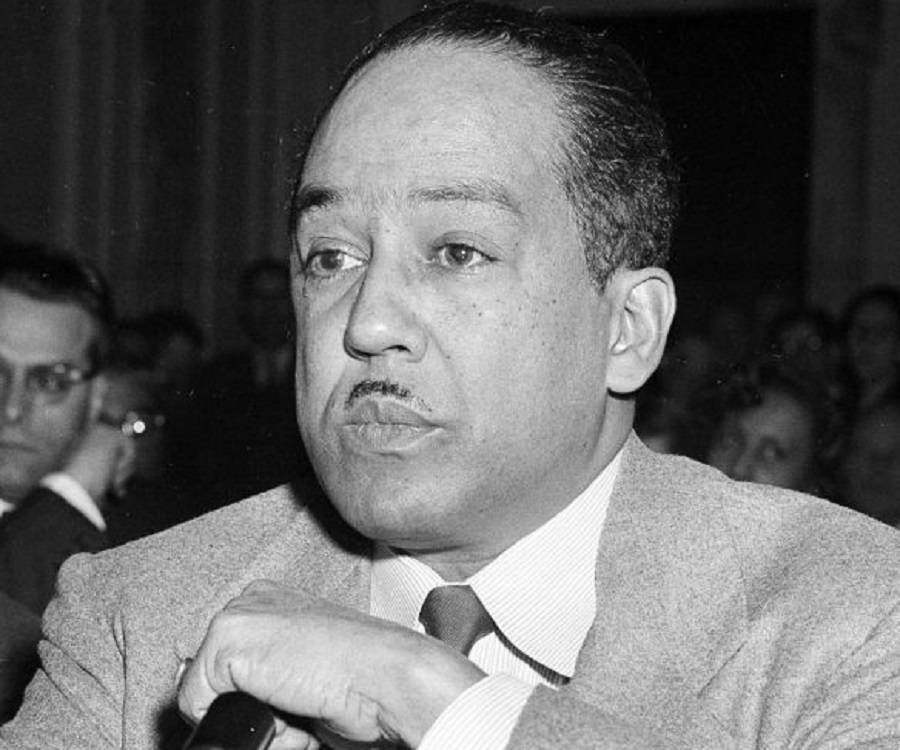
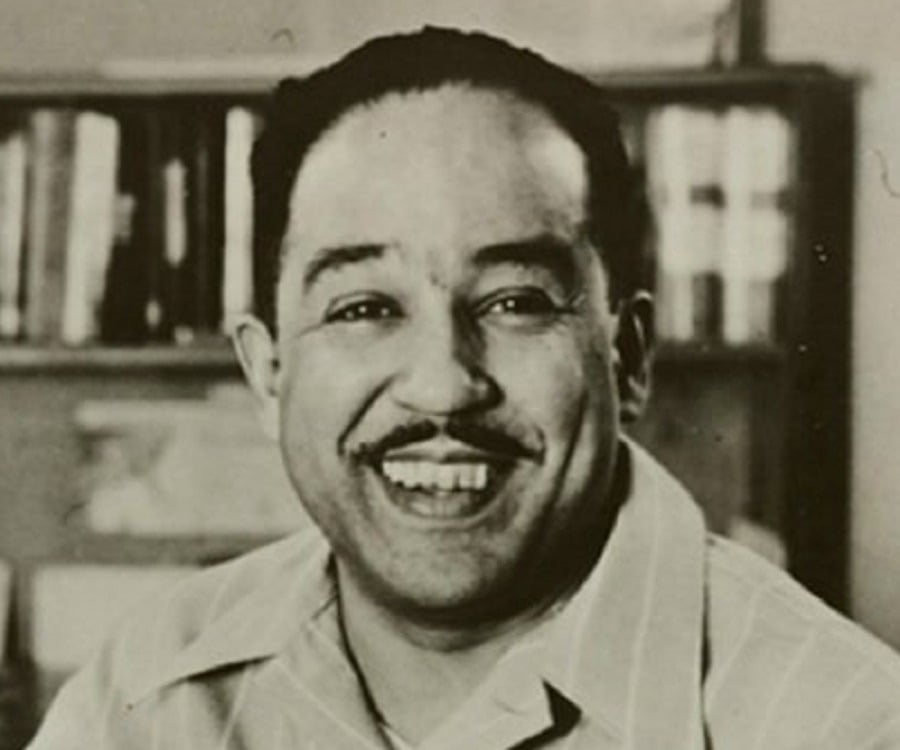
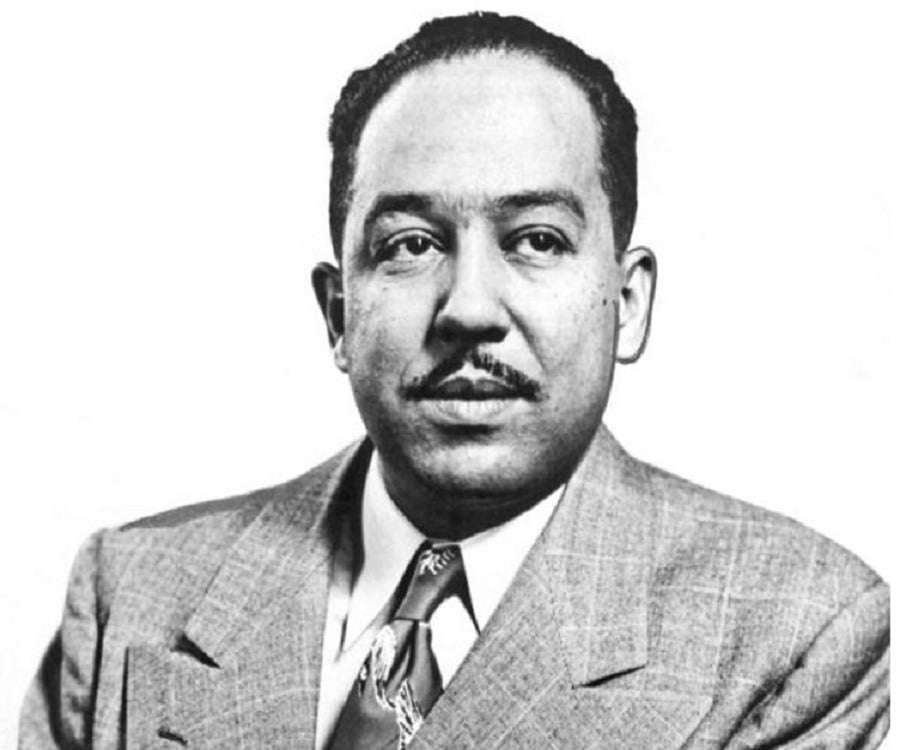
Langston Hughes was a famous American poet who was among the earliest innovators of using jazz poetry. Read more about the life of this prolific writer in the following article.
Famous People» Poets» Langston Hughes
Langston Hughes |
|
| Famous as | Poet, Novelist, Playwright, & Columnist |
| Born on | 01 February 1902 |
| Born in | Joplin, Missouri, United States |
| Died on | 22 May 1967 |
| Nationality | United States |
| Works & Achievements | Known for his work during Harlem Renaissance; Wrote significant books like, The Weary Blues (1926), Not Without Laughter and The Ways of White Folks. |
|