Joseph E. Stiglitz Childhood
Joseph E. Stiglitz was born in Gary, Indiana, to Jewish parents, Charlotte and Nathaniel Stiglitz. He grew up in a family in which political issues were discussed and debated intensely. His mother’s families were New Deal Democrats — they worshipped the FDR. Although Joseph’s uncle was a highly successful lawyer and a real estate entrepreneur, he was staunchly pro-labor. On the other hand, Stiglitz father was a Jeffersonian democrat, a small businessman working as an insurance agent who spoke about the virtues of self-employment and being one’s own boss. Though his father was conservative by nature initially, by the mid seventies, he had become a strong advocate of civil rights. He insisted on paying social security contributions and this attitude served Joseph Stilgitz a good example.
Education
Joseph went to public schools in Gary. While Gary, like most American cities, was racially segregated, it was at least socially integrated. There were children from all walks of life and the school system was designed to integrate the immigrants. The students had to learn a particular trade and Joseph had to learn printing and the basics of being an electrician. He had the good fortune of having dedicated teachers who provided high level of attention and hence guided and motivated him.
His approach to learning was reinforced by the experiences at Amherst College. Stiglitz spent three years (from 1960 to 1963) at Amherst College, a small New England College that was a men’s college at that time comprising of 1000 students. It was a liberal arts college providing students with a broader education. Amherst was a distinguished institution because of the style of teaching and it helped Joseph build strong relationships with the professors. Stiglitz had taken courses in mathematics, history, English, philosophy, and introductory chemistry and biology. This knowledge in various fields shaped Josephs thinking, especially his ideas about globalization.
Although Joseph loved all the courses he had taken, he had an irresistible attraction towards economics. Three of his teachers showed him the range of the subject. Arnold Collery, who was the Dean of Columbia College later, was a thoughtful and learned scholar from whom Stiglitz studied both microeconomics and macroeconomics. James Nelson, who taught introductory economics, was an energetic policy economist. Finally, Ralph Beals was a young graduate from MIT trained in mathematical techniques. These three professors greatly inspired Stiglitz to take the decision of majoring in economics.
As what he would be doing in the final year at Amherst would largely be repeated. At the first year of graduate school, he was given a full scholarship by Amherst to go to MIT without even given a degree from the college yet. So he continued as a final year undergraduate student in MIT from 1964 to 1965. However, later, he was given his undergraduate degree from Amherst too.
While at Amherst, Joseph Stiglitz was an active member of all the Student Council team. He was elected as the president in his final year. He began a campaign to abolish fraternities because they were socially divisive. This was one of the campaigns Joseph Stiglitz raised his voice against. He organized an exchange program with a small African-American southern school.
MIT aided Stiglitz in developing him as a professional economist. He was taught by first rate professors, many Nobel prize winners including Samuelson (Nobel Laureate in 1970), Solow (Nobel Laureate in 1987), Modigliani (Nobel Laureate in 1985), and Arrow (Nobel Laureate in 1972).
After his first year at MIT, Stiglitz had the opportunity to edit Paul Samuelson’s papers. After his first year as a graduate student at MIT, from 1965 to 1966, he moved to University of Chicago to do a research under Hirofumi Uzawa, who had received a grant from the National Science Foundation. A dozen students from around the country accompanied him to work on a particular theory. He then studied for his Ph. D. from MIT from 1966 to 1967 during which he also held an MIT assistant professorship. The style of MIT economics suited him well. The simple and concrete models were directed at answering important and relevant questions. From 1966 to 1970, he worked as a research fellow at the University of Cambridge. He arrived at Fitzwilliam House as a Fulbright Scholar in 1965 and then won a Tapp Junior Research Fellowship at Gonville & Caius College.
Career
After returning from Cambridge, Stiglitz took a one-year appointment as an assistant professor at MIT, after which he went to Yale. In his subsequent years, he held academic positions at Yale, Stanford, Duke, Oxford, and Princeton. He was the professor of Economics at Yale university from 1970-1974. Then he went on to teach economics at Stanford University for another two years. Stiglitz was the Drummond professor of political economy at Oxford University for another three years. He served at Princeton University from 1979 to 1988.
Currently Stiglitz is a Professor at Columbia University, with appointments at the Business School, the Department of Economics and the School of International and Public Affairs (SIPA). He is the editor of The Economists' Voice journal with J. Bradford De Long and Aaron Edlin. From 2005, he chaired The Brooks World Poverty Institute at the University of Manchester. Moreover, he also co-chairs the Columbia University Committee on Global thought.
In addition to contributing to microeconomics, Stiglitz has played a number of policy and government roles. He served in the Clinton Administration as the chair of the President's Council of Economic Advisors (1995 – 1997). At the World Bank, he served as the Senior Vice President and Chief Economist (1997 – 2000), in the time when protests against international economic organizations started, most significantly after the Seattle WTO meeting of 1999. He was fired by the World Bank for expressing dissent with the policies.He was a lead author for the Intergovernmental Panel on Climate Change.
In July 2000, Stiglitz founded the Initiative for Policy Dialogue (IPD), with support of the Ford, Rockefeller, McArthur, and Mott Foundations and the Canadian and Swedish governments, to enhance democratic processes for decision-making in developing countries and to ensure that a broader range of alternatives and stakeholders are at the table.
Stiglitz is a member of Collegium International, an organization of leaders with political, scientific, and ethical expertise. Their goal is to provide new approaches in overcoming the obstacles, keeping in mind the peaceful, socially just and an economically sustainable world. He is also a member of the scientific committee of the Fundacion IDEAS, a Spanish think tank.
Stiglitz has advised American President Barack Obama, but has also been sharply critical of the Obama Administration's financial-industry rescue plan.
In October 2008, he was asked by the President of UN's General Assembly to chair a commission entrusted with drafting a report on the reasons for and solutions to the financial crisis. In response, the commission produced the Stiglitz Report.
On July 25, 2011, Stiglitz participated to the "I Foro Social del 15M" organized in Madrid, Spain to express his support to the 2011 Spanish protests.
Contribution to Economics
Joseph Stiglitz has had many vital contributions to economics. His researches and techniques gained him recognition and earned him the many prizes.
Information Asymmetry-A technique called screening was one of Stiglitz’s most famous researches. It was a method used by one economic agent to extract private information from another. This research was carried on with George A. Akerlof and A. Michael Spence and Stiglitz went on to share the Nobel Memorial Prize in Economics in 2001 with them.
Efficiency wages: the Shapiro-Stiglitz model-Stiglitz also did research on Efficiency wages, which helped explain why there was unemployment even in equilibrium, why wages are not bid down by job seekers, etc. This was known as the ‘Shapiro-Stiglitz model’ as the answers to these puzzles were proposed Shapiro and Stiglitz together in 1984.
Books and Publications
Along with the technical economic publications and many articles (over 3000), Stiglitz has authored and edited many books. He has written books related to patent law and abuses in international trade. He founded one of the leading economics journals — “The Journal of Economic Perspectives”. His write-ups have been translated into more than a dozen languages.
Some of his famous and most recent books include
Personal Life
Following two failed marriage, Stiglitz married for the third time to Anya Schiffrin on October 28, 2004. He works at the School of International and Public affairs at Columbia University. | |||||
Joseph E. Stiglitz Timeline: | |||||
1943: Born in Gary, Indiana
1960-1963: Undergraduate student at Amherst College
1964-1965: Final year undergraduate at MIT
1965-1966: Research under Hirofumi Uzawa at University of Chicago through the NSF Grant
1966-1967: Studied for Ph.D. at MIT
1966-1970: Research fellow at University of Cambridge
1970-1974: Professor of Economics, Yale University
1974-1976: Professor of Economics, Stanford University
1974: Received honorary doctorate from Amherst College
1976-1979: Drummond Professor of Political Economy, Oxford University
1979: Received John Bates Clark Medal
1979-1988: Professor of Economics, Princeton University
1995-1997: Chairman of the President's Council of Economic Advisors at the Clinton Administration
1997-2000: Senior Vice President and Chief Economist at the World Bank
2000: Founded the Initiative for Policy Dialogue IPD
1988–2001: Professor of Economics and Senior Fellow, Hoover Institution, Stanford University
2001: Shared Nobel Memorial Prize in economics for the work done on ‘Information asymmetry’
2008-2009: Chair, International Commission on the Measurement of Economic Performance and Social Progress, appointed by President Sarkozy, |
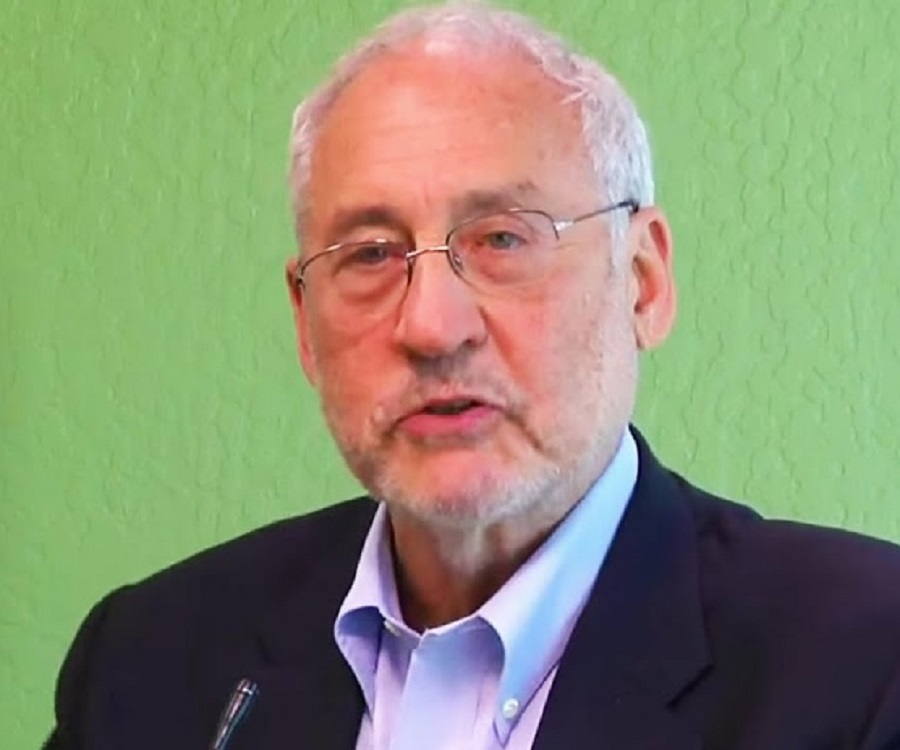
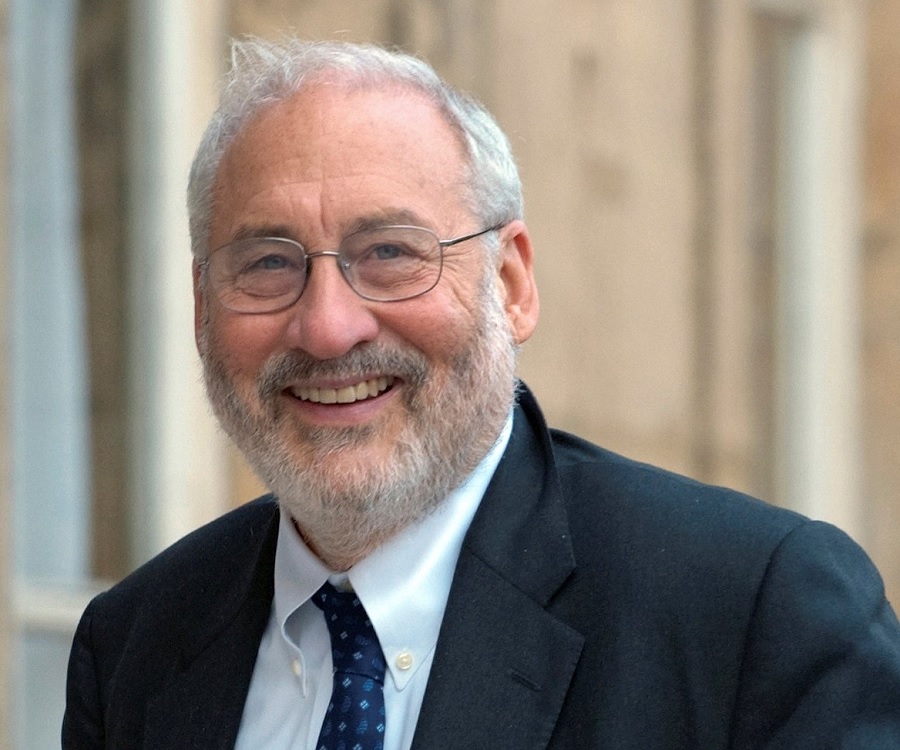
An eminent economist and Nobel Prize recipient, Joseph E. Stiglitz has quite a slew of accomplishments to boast. Know all about his profile, childhood, life and timeline in this biography below.
Famous People» Economists» Joseph E. Stiglitz
Joseph E. Stiglitz |
|
| Famous as | Economist & Author |
| Born on | 1943 |
| Born in | Gary, Indiana |
| Nationality | United States |
| Works & Achievements | Recipient of Nobel Memorial Prize and John Bates Clark Medal |
|