Childhood & Early Years
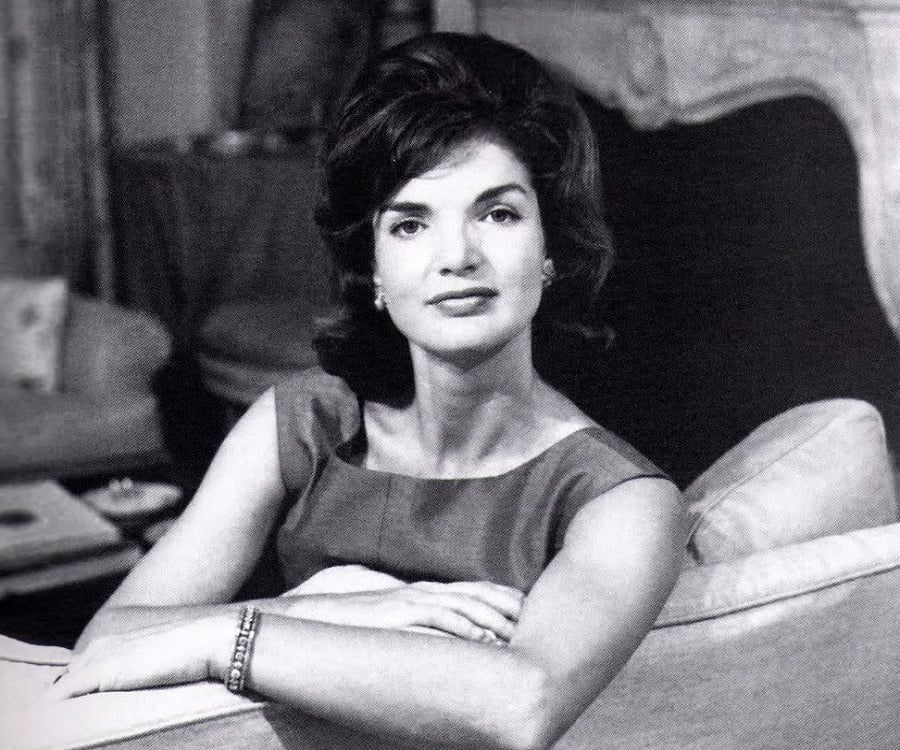
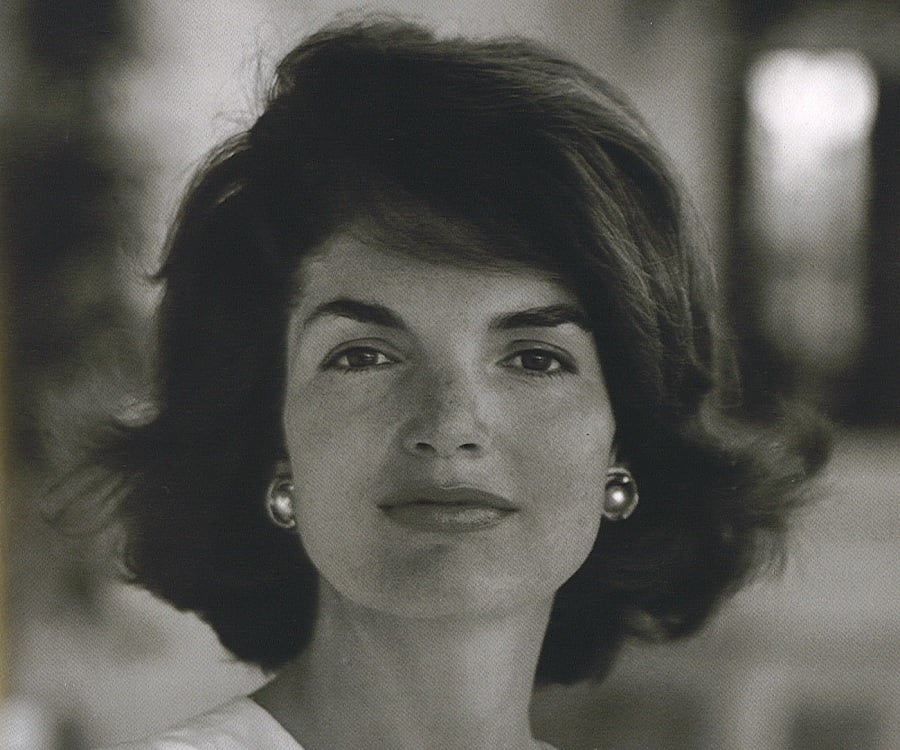
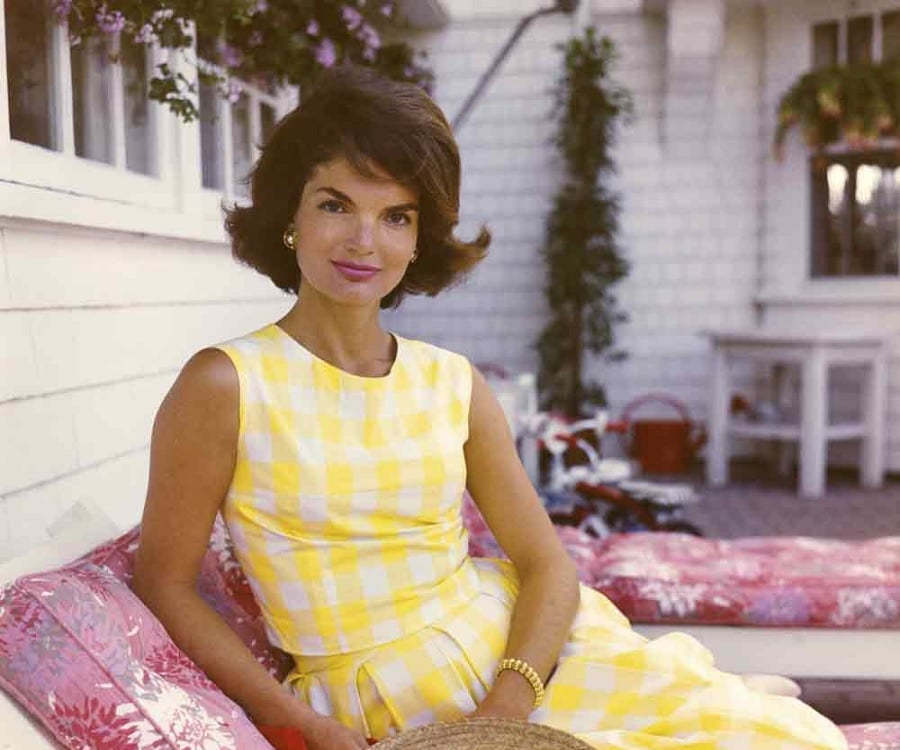
Jacqueline Lee “Jackie” Kennedy Onassis was born as Jacqueline Lee Bouvier on July 28, 1929 in Southampton, New York. Her father, John Vernoun Bouvier III, popularly called ‘Black Jack’ for his tan, was a wealthy Wall Street stockbroker, having French, Scottish, and English ancestry.
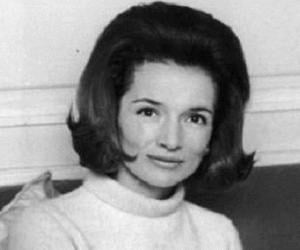
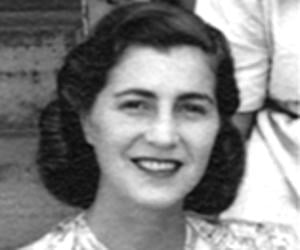
Her mother, Janet Norton Lee Bouvier, was a socialite of Irish descent. She was also an accomplished equestrienne. The couple had two daughters, Jackie and her younger sister Caroline Lee Bouvier, both of whom were raised in Catholic faith.
Since her childhood, Jackie idolized her father, having a close relationship not only with him, but also with her paternal grandfather, Major John Vernou Bouvier. They also favored her over her sister, helping her to develop her unique individuality and self-confidence.
Jackie spent most of her childhood in their Manhattan home. The summers were spent at ‘Lasata’, his paternal grandfather’s country home in East Hampton. Built on 12 acres of land, the estate included a large stable and it was here that Jackie first learned to ride horses.
In 1935, Jackie was enrolled at the Chapin School, where she studied from grade 1 to 6. Brilliant, but naughty; she quickly finished her assignments and then started playing pranks. It stopped when her headmistress told her that nobody would notice her good qualities unless she behaved.
Although John Bouvier dotted on her daughter he was also an alcoholic and a womanizer. In 1936, it led to his separation from his wife, which culminated into a divorce in 1940. The separation affected Jackie a great deal and she began to withdraw into a private world of her own.
Outwardly she led a normal life, often visiting her father. At the age of 11, she had the rare distinction of earning a double victory at the national junior horsemanship competition. At the age of 12, she started taking ballet lessons at the Metropolitan Opera House and also started learning French.
In 1942, as her mother married Hugh Dudley Auchincloss, Jr., her life changed once more. She now began to live primarily in Auchincloss’ Merrywood estate in McLean, Virginia, also spending some time with her father in New York City and Long Island.
From Her mother’s marriage to Auchincloss, she had two half-siblings, Janet Jennings Auchincloss and James Lee Auchincloss. In addition, she had three more step-siblings from her stepfather’s two previous marriages; Hugh "Yusha" Auchincloss III, Thomas Gore Auchincloss, and Nina Gore Auchincloss.
In 1942, she left Chapin School to enroll at Holton-Arms School in Northwest Washington, D.C. Thereafter from 1944 to 1947, she studied at Miss Porter's School in Farmington, Connecticut, where she excelled as a student, winning Maria McKinney Memorial Award for Excellence in Literature in her senior class.
In 1947, Jackie enrolled at Vassar College in New York to study history, literature, art and French. In the same year, before she entered the college, she was named "Debutante of the Year" by a local newspaper.
In 1949, she went to France in a study-abroad program and took the opportunity to polish her French. She also grew a love for French culture, associating it with her father, who was primarily of French descent.
Upon returning home in 1950, she transferred to George Washington University, graduating from there with a Bachelor of Arts degree in French literature in 1951. In the same year, she received appointment at the Washington Times-Herald newspaper, becoming its ‘Inquiring Camera Girl’.
Continue Reading Below
Mrs. Jackie Kennedy
In May 1952, Jacqueline Bouvier was introduced to John F. Kennedy, at that time a dashing young member of the House of Representative, running for the Senate. He proposed to her in November 1952, their engagement was announced on June 2, 1953, and they got married on September 12, 1953.
All was not well in the beginning. While John Kennedy had to undergo spinal surgery, she had a miscarriage, later giving birth to a stillborn child named Arabella. Yet, she encouraged him to write and later helped to edit his famous book, ‘Profiles in Courage’, first published in January 1, 1956.
In 1957, she gave birth to her eldest surviving child, Caroline, at the same time helping her husband in his campaign for re-election to the Senate. Later John Kennedy acknowledged her contribution to his election.
On January 3, 1960, John F. Kennedy announced his candidacy for the presidency. This time too Jacqueline joined the nationwide campaign, traveling everywhere with her husband. But later as she became pregnant once more, she stopped traveling, but continued to help her husband by writing syndicated columns.
First Lady
On January 20, 1961, John F. Kennedy was sworn in as the President of the USA and with that Jacqueline became the third youngest First Lady of the country. By then, she had given birth to their only surviving son, John F. Kennedy, Jr. Her second son Patrick, born in 1963, died within two days.
Although her first priority was to serve the President and her children, she soon started taking up other duties, appointing her election-time social secretary, Letitia Baldrige, as the Chief of Staff. She was also the first First Lady to appoint a personal press secretary.
Restoration of the White House, turning it into a museum of American history and culture was her major contribution of this period. She also invited leading writers, artists, musicians and scientists to the state dinners, thus showing her appreciation for the American art and culture.
As the First Lady, she also traveled extensively, sometimes with her husband, sometime alone. Her sense of fashion as well as her deep knowledge about various cultures made her popular as much with international dignitaries as with the common people.
On November 22, 1963, Jacqueline Kennedy life as the First Lady came to a sudden halt. On that fateful day, while they were traveling in a Lincoln Continental convertible through the crowded streets of Dallas, President Kennedy was shot in the head by Lee Harvey Oswald.
Continue Reading Below
With her pink Channel suit splashed with her husband’s blood, she accompanied him into the operating room at the Parkland Hospital, Dallas. But the doctors failed to revive the President and he was pronounced dead. Thus Jacqueline became a widow at the age of thirty-four.
Wanting the world to see her husband’s blood, she refused to change her clothes and embarked on Air Force One to return to Washington DC, standing by Lyndon B. Johnson as he took oath of office as President. No other widowed First Lady had done this before.
Later she took active role in arranging her husband’s funeral, using many details from Abraham Lincoln’s funeral almost a century earlier. Her quiet dignity at the ceremony as well as the sight of two young children, standing beside her, moved everybody.
Life After Her Husbands Death
After her husband’s death, Jackie Kennedy spent one year in mourning. President Johnson offered her ambassadorships to France, UK and Mexico, but she declined them all. Instead in 1964, she bought a 15th floor apartment at 1040 Fifth Avenue on Manhattan for herself and her children.
While he was alive, President Kennedy had started a work on establishing a repository for his Administration‘s official papers, but died before there was much progress. Jackie now took up work, supervising the establishment of the John F. Kennedy Presidential Library and Museum at Massachusetts.
In 1966, she also tried to block the publication of ‘The Death of a President,’ by William Manchester because it contained some passages detailing the President’s private life. Ultimately, she was successful in deleting the offending paragraphs from the final publication.
During the Vietnam War in November 1967, Jacqueline Kennedy traveled to Cambodia with British diplomat David Ormsby-Gore. The visit became the starting point for an improved US-Cambodian relationship.
In 1968, as her brother-in-law Robert Kennedy entered the Presidential race, she began campaigning for him. Her hope to see another Kennedy at the White House was dashed to pieces when on June 5, 1968 Robert was shot at and mortally wounded.
Mrs. Jacqueline Onassis
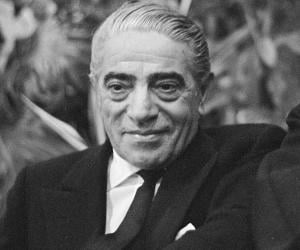
After the death of another Kennedy, Jacqueline started fearing for the life of her children and wanted to get out of the USA. On October 20, 1968, she hurriedly married her long-time friend Aristotle Onassis, a wealthy Greek shipping magnate.
Continue Reading Below
On becoming Jacqueline Onassis, she lost Secret Service protection. But she knew Aristotle Onassis would be able to provide her with security and privacy she was looking for, both for herself and her children. However, she made sure that her children keep in touch with the Kennedys.
At home in USA, public was outraged at the marriage. As Onassis was a divorcee, many took the opportunity to call her a ‘public sinner’. The paparazzi also made her life difficult.
Return to U.S.A
Aristotle Onassis died on March 1, 1975, making Jacqueline widow for the second time. She now returned home to take up the position of a consulting editor at Viking Press. Meanwhile, she became embroiled in law suit with Aristotle’s daughter over his legacy.
In 1977, she resigned from her job at Viking Press and took up the position of a senior editor at Doubleday. Possibly in the same year, she accepted a $26 million from Aristotle’s daughter and waived all other claims on his estates.
She also took interest in preserving landmarks such as Grand Central Terminal in New York. When in 1979, her brother-in-law Ted Kennedy announced his intention to challenge incumbent President Jimmy Carter for the Democratic nomination she was there beside him, taking part in the subsequent presidential campaign.
Major Works
Jacqueline Kennedy is best remembered for restoration of the White House. Prior to her time, it was customary for the departing Presidents to take away the furniture they used. Therefore, when she entered the White house, she found the furniture utterly undistinguished, lacking in historical significance.
To restore the glory of the White House, she started tracking down the missing furniture and other pieces of historical interest, writing to the possible donors personally. With her guidance, a bill was passed that made the White furnishings property of the Smithsonian Institution, preventing future presidents from claiming them.
Her work was complete by the beginning of 1962. In February, she invited Charles Collingwood of CBS News for a television tour of the White House. Meanwhile in 1961, she set up White House Historical Association in order to help the public to understand, appreciate, and enjoy the White House,
Personal Life & Legacy
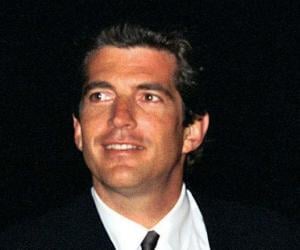
Jackie Kennedy had four children from her marriage with John F. Keneddy. The first was a stillborn daughter, Arabella, born in 1956. In 1957, the couple had a daughter named Caroline. She is the only surviving child of John and Jackie Kennedy. In 1960, she gave birth to a son named John F. Keneddy Jr. He died in a plane crash in 1999. In 1963, the couple had their fourth child, son named Patrick, who died after two days.
She had no child from second marriage with Aristotle Onassis. After the death of her second husband Aristotle Onassis, Jacqueline’s name was romantically linked with different men. However, for the last twelve years of his life, Maurice Tempelsman, a Belgian-born diamond dealer, had been her constant companion.
In December 1993, she was diagnosed with non-Hodgkins lymphoma and died from it on May 19, 1994 at New York Hospital–Cornell Medical Center. The funeral was held on May 23, 1994 at the Church of St. Ignatius Loyola, the same Catholic parish where she was baptized years ago.
The Jacqueline Kennedy Garden, located south of the East Colonnade at the White House continues to carry her legacy. It is mostly used by Presidents for award giving ceremonies.