Childhood & Early Life
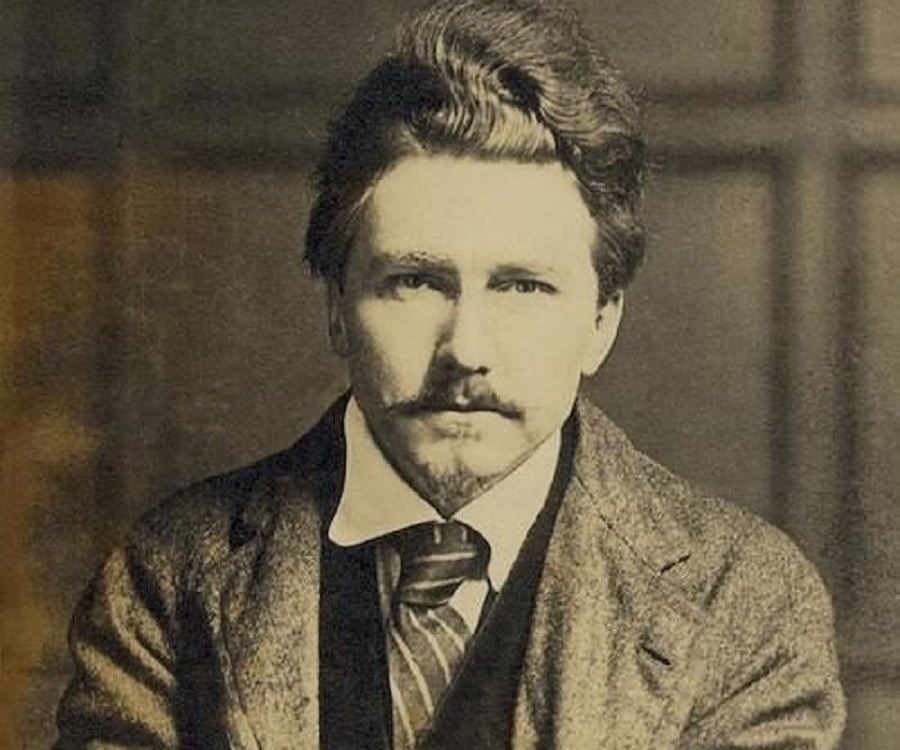
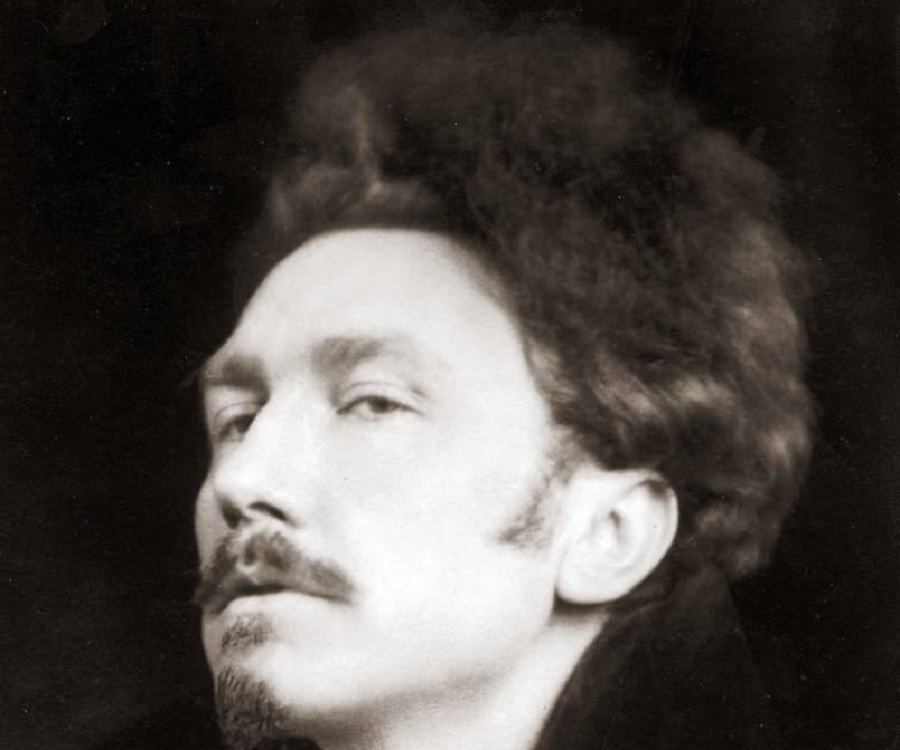
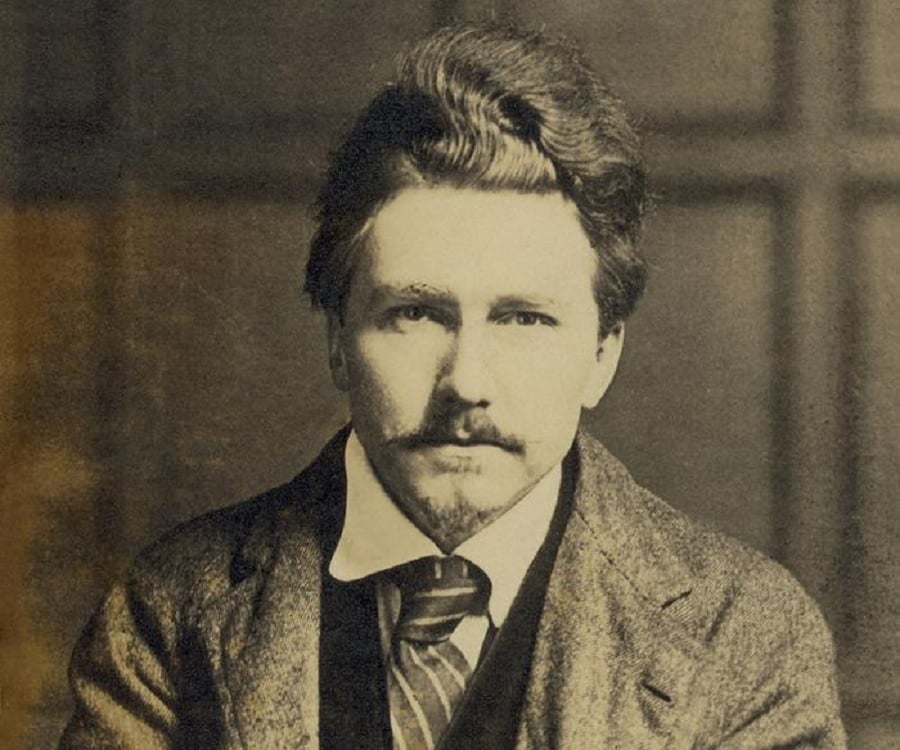
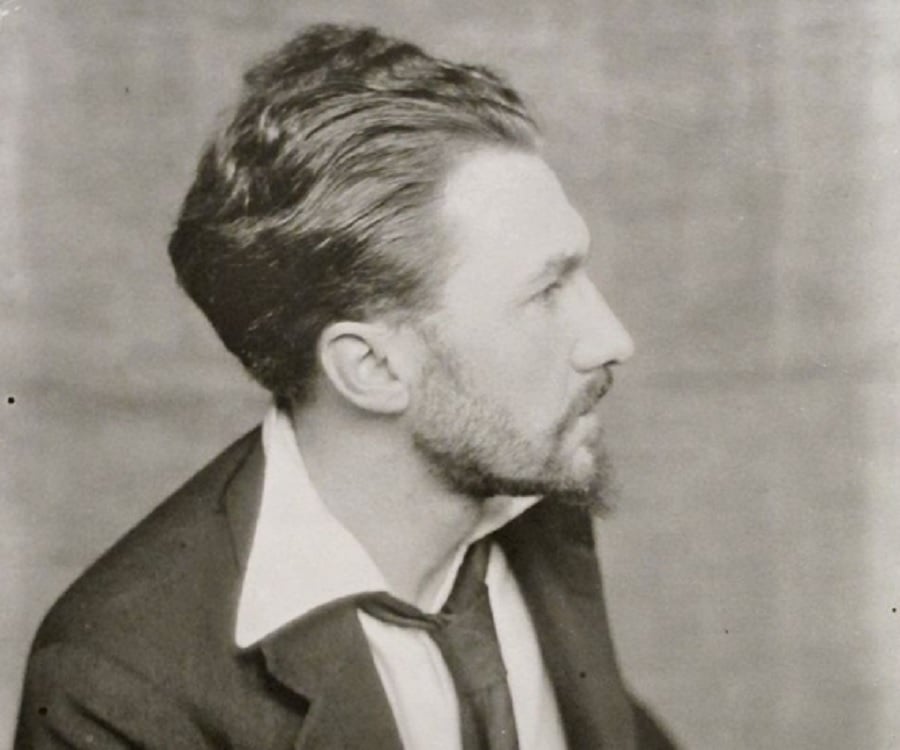
Ezra Weston Loomis Pound was born on 30 October 1885 in the small mining town of Hailey, then a part of the Territory of Idaho. At the time of his birth, his father, Homer Loomis Pound, originally from Wisconsin, was employed as the Registrar of the General Land Office in Hailey.
Ezra’s mother, Isabel Weston, was from New York. She could not adjust to the life at Hailey and in 1887 she returned to New York, taking eighteen-month-old Ezra with her. Subsequently Homer too followed them. Ezra remained their only child.
In 1889, Homer was appointed an assayer at the Philadelphia Mint and with that the family moved to Jenkintown, located just outside the city. There in 1892, Ezra began his education at the Miss Elliot’s dame school.
Ezra spent a major part of his early years at Wyncote where his father bought a house in 1893. Here he was first enrolled at the Heathcock family's Chelten Hills School. Later in 1894, he was moved to the Florence Ridpath School.
In 1896, while studying at Florence Ridpath School, eleven-year-old Ezra had his first poem published. It was a limerick on the Democratic nominee William Jennings Bryan, who had narrowly lost the 1896 Presidential Election. It was published in the 7 November issue of the ‘Jenkintown Times-Chronicle.’
In 1897, Ezra Pound was admitted to Cheltenham Military Academy, where he studied Latin, English, history, arithmetic, marksmanship, and military drilling. Moreover, it was here that he learned the importance of submitting to the authority.
In 1898, while he was studying at the Military Academy, he was taken on a tour of Europe by his mother and aunt. In this three-month trip, he visited England, Belgium, Germany, Switzerland and Italy.
In 1900, he left the Academy to finish his high school education at Cheltenham Township High School, finally graduating from there in 1901. By now he had decided to become a poet and had told his parents. It is not known if at this stage they had taken him seriously.
After graduating from school, he first entered the University of Pennsylvania's College of Liberal Arts. In 1902, Pound was taken on another three-month’s tour of Europe. Thereafter, he left the university without graduating.
In 1903, Pound entered Hamilton College in Clinton, New York, with philosophy. In addition, he took up a Latin-Scientific course and studied the Provençal dialect as well as Old English.
Now, his aim was to “know more about poetry than any man living” and to fulfill it, he learned nine foreign languages and read oriental literature in translation, fighting with everybody who tried to dissuade him from his path. This was also the time he developed from Dante’s works, the idea of long poems.
In 1905, Pound earned his bachelor’s degree in philosophy from Hamilton College. Thereafter, he returned to the University of Pennsylvania to study Romance languages, a branch of the Italic languages within the Indo-European language family.
In 1906, on earning his M.A. from Pennsylvania, he started working for his doctoral thesis with a Hamilton Fellowship, which not only covered his tuition fees, but also provided a travel allowance of $500. His dissertation was intended to be on the jesters of the Spanish playwright Félix Lope de Vega y Carpio.
However, he never finished his doctoral work; instead in 1907, he started teaching Romance languages at Wabash College in Crawfordsville, Indiana. Unfortunately, the place, as well as the college, was much too conservative for his bohemian mannerism. He therefore lost his job in early 1908.
Continue Reading Below
Birth Of A Poet
Subsequently, he left for Europe sometime in February 1908, arriving at Gibraltar on 23 March. Here he worked for few weeks as a guide to American tourists, earning $15 a day and then moved to Venice in April. At that time, he had only $80 in his kitty.
While in the USA, he had compiled a book of poems, titled ‘A Lume Spento’, but failed to find a publisher for it. Now in Venice, he spent $8 out of his own pocket to self-publish the work. The initial edition was of one hundred copies.
Later that year he moved to London and there he was able to persuade Elkin Mathews, a London publisher and book seller, to display his book. Although it did not have the kind of impact he had expected, by October, he had begun to be discussed in the literary circles.
In December 1908, he self-published another book of poems, titled ‘A Quinzaine for This Yule’ and then spent the following two months teaching at Regent Street Polytechnic. Meanwhile, he managed to persuade Mathews to publish his next three books.
Out of the three, ‘Personae of Ezra Pound’ was published in April 1909. It was his first commercial success and was followed by his fourth book of poems, ‘Exultations of Ezra Pound’, published in October 1909. The next book, ‘The Spirit of Romance’, published in 1910, was on literary criticism.
In the mean time, in January 1909, he met Olivia Shakespear and through her, the English poet W. B. Keats. Subsequently the two men developed a close friendship. Incidentally Olivia’s daughter Dorothy would one day become Pound’s wife.
Eventually Ezra Pound began to be accepted in the London literary and artistic circles and met luminaries like sculptor Henri Gaudier-Brzeska, painter Wyndham Lewis and poet T. E. Hulme. For a short while, he also received patronage from the American heiress Margaret Lanier Cravens.
In June 1910, he returned to the USA, trying to establish himself as a poet in Philadelphia. When that did not happen, he returned to England in early 1911. After a brief visit to Paris, he settled down in London, writing a weekly column for the socialist journal, ‘The New Age.’
Continue Reading Below
A Movement Called Imagism
In 1912, Pound was appointed London correspondent of ‘Poetry’, a Chicago based magazine founded by Harriet Monroe. He worked hard on it, reviewing the works of many upcoming poets like Robert Frost and D. H. Lawrence. Very soon, he became a well-established name in London’s literary circles.
Sometime in the same year, Pound, along with Richard Aldington and Hilda Doolitle decided to start a movement they called Imagism. The main theme of the movement was that, any word that does not contribute directly to the presentation should be avoided.
In October 1912, he had ‘Ripostes of Ezra Pound’ published. The book, containing twenty-five poems, is his first example of Imagism. This was also the book, in which he for the first time used the word ‘Imagiste.’
Subsequently, he began writing for ‘Egoist’ and in 1914, published ‘Des Imagistes’, the first anthology of the Imagism movement. In the same year, he also started collaborating with then un-known James Joyce and helped to publish his two novels, ‘Portrait of the Artist as a Young Man’ and ‘Ulysses.’
At the same time, Pound continued with his own literary pursuits, starting his long poem, ‘The Cantos’ in 1915. However, he was not very earnest in this work for it took him two years to publish ‘Canto III’ in ‘Poetry.’
Maybe that was because the destruction brought about by the World War I had a terrible effect on him. He published a number of works at the conclusion of the war, and then in December 1920, he left England for good. ‘Hugh Selwyn Mauberley’ was the last work completed in England.
In Italy
After residing in London for twelve years, Ezra Pound moved to France. There he became friendly with a number of artists and writers, but by 1924, he was fed up with the Parisian scene and decided to move again. Significantly, it was here in Paris that he developed his friendship with Ernest Hemmingway.
He now chose the city of Rapallo in Italy and there he spent the next two decades of his life. It was here that he actually restarted his work on ‘The Cantos.’
Sometime now, he came to believe that capitalism was the cause of the First World War, blaming the Jewish bankers for it. His greatest fear was that the economy would henceforth be dependent on armament industry and war and peace would depend on its hunger for profit.
Continue Reading Below
He now gave a series of lectures on economics and contacted the US political leaders to discuss international politics. He also met Benito Mussolini on 30 January 1933. Sometime now, he also applied for broadcasting rights on Rome Radio, but believing him to be a double agent, they refused permission.
Ultimately, he received the permission after two years of haggling and from January 1935, he began broadcasting on Rome Radio, criticizing Jews as well as American policies, President Roosevelt, and even his family. He also spoke about poetry, economics, and Chinese philosophy.
In April 1939, he sailed for the USA, trying to stop the country from getting involved in the upcoming Second World War. Unsuccessful in his mission, he returned to Italy in June or July, retaining his US citizenship.
He now began writing anti-Semitic articles for Italian newspapers as well as for Sir Oswald Mosley’s fascist newspaper ‘Action.’ He also wrote a letter to James Laughlin, criticizing Roosevelt, and signed it with “Heil Hitler.”
When the Second World War finally broke out in September 1939, along with writing letters and articles, he continued with his broadcast, which was monitored by Foreign Broadcast Information Service of United States. In 1943, he was tried for treason in absentia; but he defended his right to free speech through a letter.
As the war ended and Italy surrendered to the Allied force, Ezra Pound was arrested by the US Army sometime in May 1945. He imprisoned in a small wire cage with concrete flooring, kept out of door in the American Disciplinary Training Center near Pisa.
It was summer and the daytime was hot; at night his cage was floodlighted. He was also denied communication and exercise. Living under such conditions for two and a half weeks, Pound had a mental breakdown.
Later, he was shifted to a tent, where he was allowed reading material and had access to a typewriter. It was during this period that he wrote ‘The Pisan Cantos.’ Published in 1948 in New York, it is the most admired section of the work.
Continue Reading Below
Arrest & Release
Pound was brought back to the USA on 15 November 1945 and charged with treason on the 25th. But before he could be put to trial, he was declared insane and admitted to St. Elizabeths Hospital. Initially, he was kept in the prisoner’s ward, but later shifted to the more pleasant surroundings of Chestnut Ward.
Here he was allowed to read and write and also entertain visitors. Slowly, he resumed his work on ‘The Cantos’ and also started translating ‘Sophocles's Women of Trachis’ and ‘Electra.’ He felt so comfortable there that he refused to entertain any discussion on his release.
Nonetheless, his friends started campaigning for his release. It received the requisite momentum when Ernest Hemingway, who won the Nobel Prize for Literature in 1954, pledged in 1957 to give $1,500 to Pound upon his release. Ultimately in April 1958, Pound was set free.
In July 1958, Pound was brought back to Italy, where he lived until his death in 1972. Although he resumed his work on ‘The Cantos’ he could never finish it.
Personal Life & Legacy
Ezra Pound married Dorothy Shakespear on 20 April 1914, while he was a budding poet in London. They had one son Omar, who was raised by Dorothy’s mother Olivia Shakespear. Pound hardly knew him.
He also had a life-long affair with American violinist Olga Rudge, whom he met in 1922 while he was living in Paris and with whom he had a daughter named Mary. Although Dorothy accepted the liaison, Mary never knew about her father’s other family until he told her just before his arrest.
Both the women Dorothy and Olga stood by him during his arrest and subsequent release. However, it was Olga who took care of Pound during the last eleven years of his life, while Dorothy lived in London with their son Omar. Unlike his relationship with Omar, Pound was close to Mary and lived with her for some time.
During the last eleven years of his life, Pound suffered from declining health. In spite of that, he traveled to London and Dublin in 1965 and to New York in 1967. However by 30 October 1972, he was too weak to leave his bedroom.
He died on November 1, 1972, because of an intestinal blockage. His body was later buried in the island cemetery, Isola di San Michele.