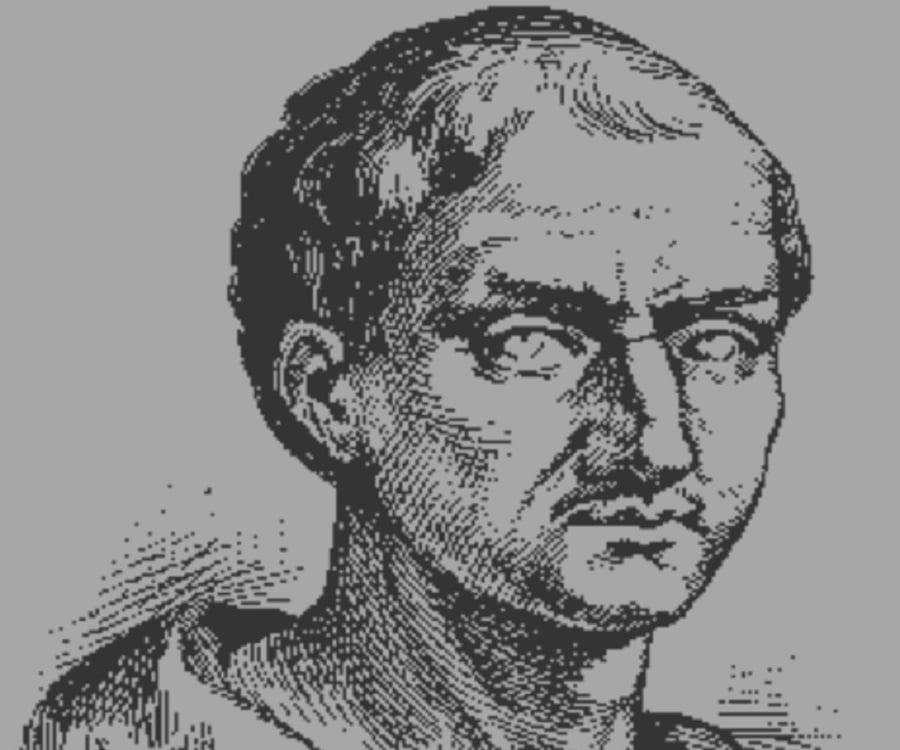
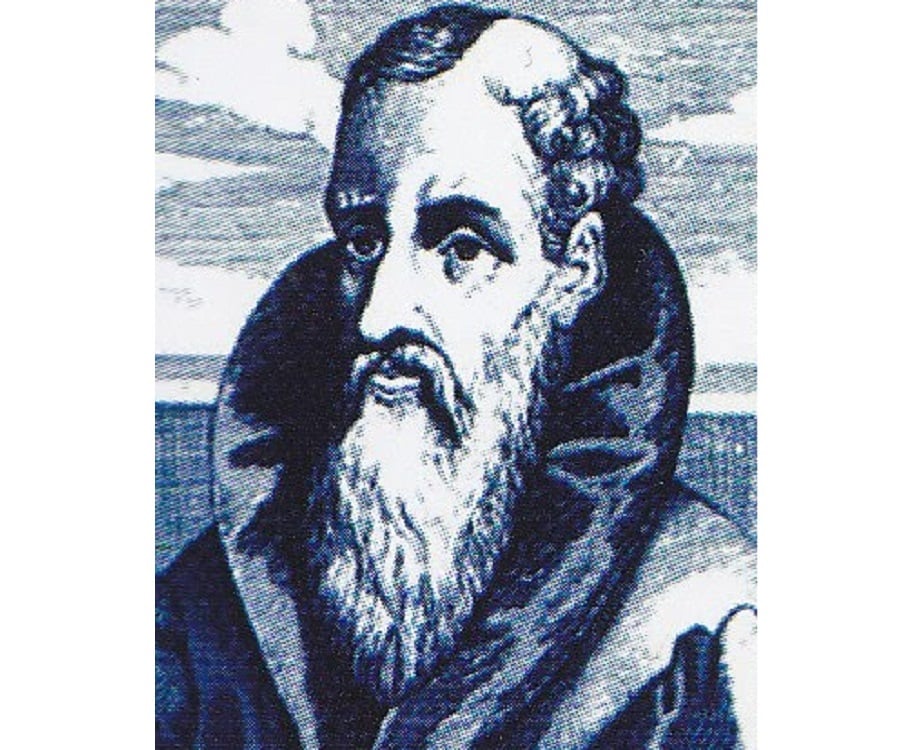
Boethius was the last among the greatest Romans and one of the greatest philosophers the world has ever known. Explore all about his profile, childhood, life, and timeline in this biography below.

Anicius Manlius Severinus Boethius

PrintRecommend This Site
Famous as Philosopher, Theologian, Statesman
Born on 0480
Born in Rome
Died on 0524
Nationality Italy
Works & Achievements Consolation of Philosophy, Boethius' books on geometry, astronomy, arithmetic, philosophy, mathematics, theology and music became an authority on these fields

"Last of the Romans", as he is fondly dubbed, Boethius, the Roman philosopher and statesman, is regarded by many as a Christian martyr who died for a Christian cause. However, for the academic world, he was a philosopher whose lifetime goal was to translate the works of Plato and Aristotle into Latin — if successful, it would have changed the course of history. Being the last great Roman writer who understood Greek, Boethius' books on geometry, astronomy, arithmetic, philosophy, mathematics, theology and music became an authority on these fields in medieval schools. He is also feted for being one of the firsts in introducing Greek Philosophy to the Latin West. Known as the founder of middle ages, he was much more than a compiler and a translator. He was a great transmitter of Greek and Latin culture and possessed exceptional skill to compose works, both theological and philosophical, in a style and treatment that can be associated only with Boethius. Plenty of men and women down the centuries have sought comfort in his masterpiece 'Consolation of Philosophy'. To summarize Boethius, he is remembered as one who always looked back at the classical periods for motivation while maintaining the rightness of Christianity.

Boethius Childhood and Early Life
Boethius was born in Rome in c.480 AD to Flavius Manlius Boethius who worked as a consul after Odoacer overthrew the Western Roman Empire. The exact date of his birth is not known. He belonged to an ancient patrician family Anicii. Boethius father’s line included two popes and considered Roman emperors like Olybrius and Petronius Maximus as their ancestors. Though he became an orphan at a very young age after his father passed away, he was raised and given formal education by Quintus Aurelius Memmius Symmachus, whose daughter he finally married. Boethius might have learned the basics of classics from his father who worked as a Procter of a school in Alexandria circa.
 
Boethius’ Rise as a Public Figure
Boethius was appointed a senator when he was 25. His education and experience fetched him a royal service under King of Ostrogoths, Theodoric the Great. In the meanwhile, in 518, the Emperor of Byzantine, Justin I, who was an orthodox, bought Constantinople back under the religious empire of Rome. One-half of the empire being orthodox created political confusions in the state as Theodoric was averse to it. As Constantinople was being made a part of Rome and Theodoric not being in communion with the church, an alarming emperor, to appease the Roman subjects, appointed the two sons of Boethius as the Joint Counsels for that year, thus honoring their father.
 
Enjoying the confidence of the king, Boethius became the noble of Rome. In the year 522, Boethius was appointed ‘magister officiorum’, who is the chief of government and court. Theodoric valued his words in all ways, which ultimately was the beginning of an end. The political occurrences did not end as Theodoric was considering the possibility of Emperor Byzantine Justin I invading Italy and overthrowing him. It was at this time that Boethius along with other senators came under the suspicion of communicating with Byzantine Emperor Justin I. When Boethius frankly shielded Senator Albinus who allegedly sent a letter to Emperor of Byzantine against Theodoric, he lost the favor of the king. 
 
King Theodoric reacted by removing Boethius from the post, stripping his title, confiscating his wealth and sending him away to Pavia. The charges against him aggravated as his enemies alleged him of plotting to restore Roman nobility and accused him of blasphemy. Boethius was also accused of treachery for plotting with Byzantine emperor whose religious orthodoxy augmented the political enmity. Boethius attributed the arrest to the enmity of the opponents, although many belonging to the elite class were arrested and executed at the same time. In 523, in Pavia, he was put to death on October 23 at the age of 44. It is said that while awaiting execution, he was treated very badly and was tortured daily. The information about the method of his execution varies in the sources as some say that he was killed with a sword or an axe or he was clubbed to death. His remains were entombed in San Pietro in Ciel d’Oro in Pavia.
 
Martyr for Christian faith
Though Boethius was born into a Christian family, there are scholars who opine that he discarded Christianity for paganism, in his last days. In many places, Boethius has been represented as a martyr of Christian faith and his feast is observed on 23 October. The reason for this was the allegation which was charged against him — devotion to the catholic cause, the theory which was glorified by Emperor Justin against Arian Theodoric.
 
Boethius as an Educator and Philosopher
Boethius believed that Rome was entitled to educate the world, and undertook the task of translating the wisdom of Greek into Latin, with appropriate explanations, in order to make it accessible to the west. He translated the entire works of Aristotle and Plato into Latin with observations and gave special attention to those issues in which both of them disagree. It is still unsure whether he completed the entire work of translating Plato and Aristotle as not all his works has survived the test of time. However, one thing is certain that during the Middle Ages, it was through the translations of Boethius that the west understood Aristotle and Plato. 
 
He penned his masterpiece ‘Consolation of Philosophy’ while he was living under house arrest, awaiting execution. The work was his premeditated attempt to safeguard the ancient knowledge, especially philosophy. The book portrayed a made-up dialogue between himself, the author and philosophy, with the latter being personified as a woman. The book takes us through the theory of a higher power and divine providence under which everything else is secondary. The work imitated the Augustan style, is theistic in language and does not give any indication that the writer is a Christian.
 
Boethius also penned two treatises — ‘Ciceronis Topica’ and ‘De Topicis Differentiis’. 'Ciceronis Topica' includes six books and is considered as a reply to Cicero’s 'Topica'. The first book includes assertions and distinctions, which exemplifies Boethius’ own view of philosophy. It also includes definitions of Plato, Aristotle and Cicero. In the book, he breaks the logic into three parts — one that defines, divides and deduces.  Book II discusses about two kinds of topics —related things and extrinsic topics. While Book III talks about the relationship between matters studied through topics, topics themselves and the nature of definition, Book IV analyses separation, description and association between various things.
 
‘Topicis Differentiis’ has four books in which Book I discuss about the features of rhetorical and dialectical topics. While Book II and Book III talks about the topics of dialectic, Book IV discusses about the unit of rhetorical topic. Though most of his works include paraphrasing the Greek works, you can find some original contributions by Boethius too. He wrote on hypothetical syllogisms — a topic which Aristotle, Plato or any other writers who wrote about logic — did not consider much. In ‘On interpretation’, he attempted to solve the issues, which arose from Arian hearsay, which denied the divinity of Christ. He made use of Aristotelian terminologies and explained the unity of god in terms of substance. Boethius also wrote a pure philosophical work known as ‘Eisagoge’ in which he discussed the status of universals. This work turned out to be a classic in the middle ages. However, the interesting fact is that neither in his logical works nor in the consolation, which was published earlier, you can find any Christian Idioms.
 
Boethius’ Extent of Knowledge
Boethius was highly educated and possessed profound knowledge in Greek and in the works of Greek Philosophers. Though he had limited knowledge in mathematics, his mathematical texts were the best available and were used for centuries in Europe. He authored ‘Arithmetic’ based on the work of Nicomachus and introduced Pythagorean number theory to the medieval scholars. He is also an important resource of material for quadrivium – an academic course introduced into monasteries that includes four topics – arithmetic, geometry, astronomy and the theory of music.
 
Boethius was an authority in music theories. His work ‘De Institutione’ is a significant work in Greek music theory. On the theory of music, he wrote about the relation of music to science. Thoughts raised by Boethius such as mathematical division of pitch space, scale forms and systems and consonance has not lost its importance even today and there are many readers who regard this work as a guide to understand the evolution of medieval music theory and its roots on Greek writings.
 
Contributions
Boethius had made many significant contributions including the translations of the works of Plato and Aristotle. They are ‘The Consolation of Philosophy’, observations on ‘Categories’, ‘On Interpretation’, and ‘Eisagoge’ by Porphyry. He also wrote ‘Opuscula Sacra’ (513 C), ‘Tractates’, ‘De Institutione’, ‘Hypothetical syllogisms (516-22) and Topical Differentiae (522-523). He also worked on Arithmetic and Greek, based on the Greek Handbooks by Nicomachus of Gerasa, who is a first century Palestinian mathematician. However, hardly any work of Boethius on Geometry and astronomy survived.
 
Legacy
Boethius’s legacy includes textbooks on geometry, music, astronomy and arithmetic, which were used extensively in the Latin Middle Ages, essays on Aristotle, Plato, Cicero and Porphyry and essays on logic.
 
Awards and accolades
Boethius was honored in the naming of moon and mercury, which are called crater Boethius.


Anicius Manlius Severinus Boethius Timeline:
480 – Boethius was born in Rome.
510 – Boethius was appointed as a consul under King Theodoric
513 – Authored ‘Opuscula Sacra’
516-22 – Wrote ‘Hypothetical Syllogisms’
522 – Boethius was appointed as Magister Officiorum, who is the chief of government and court.
522-523 – Wrote ‘Topical Differentiae’
524 – Killed in Pavia after being held as a prisoner.

PrintRecommend This Site