Quick Facts
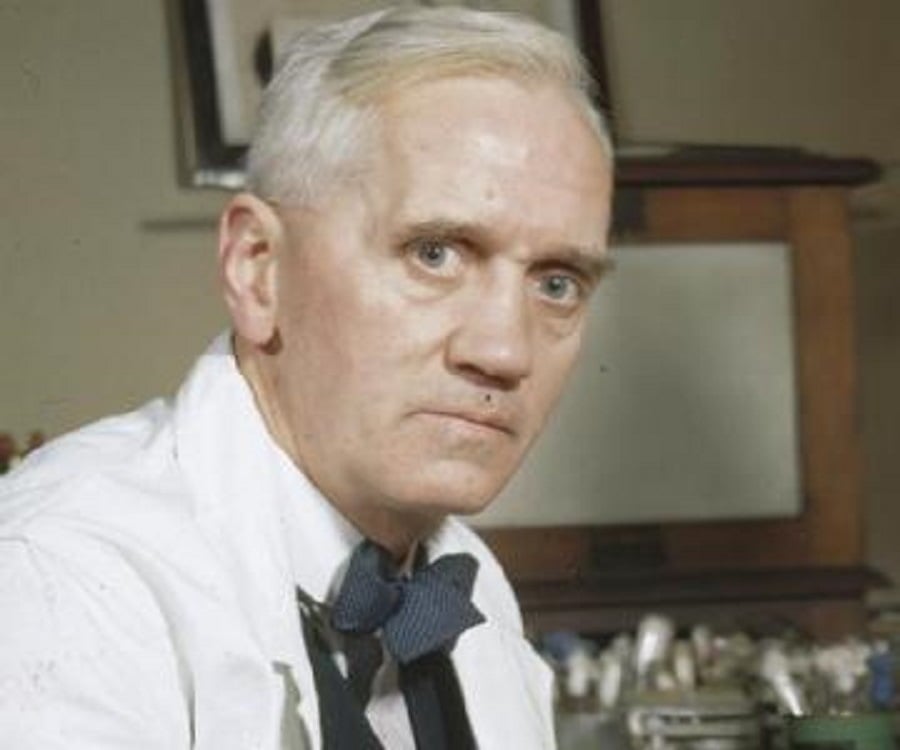
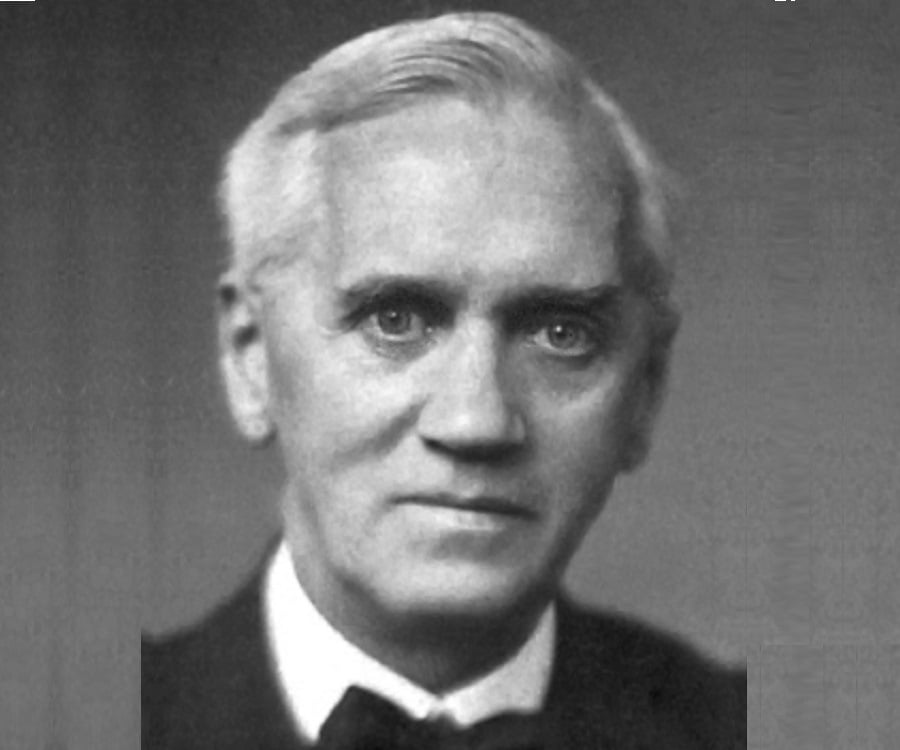
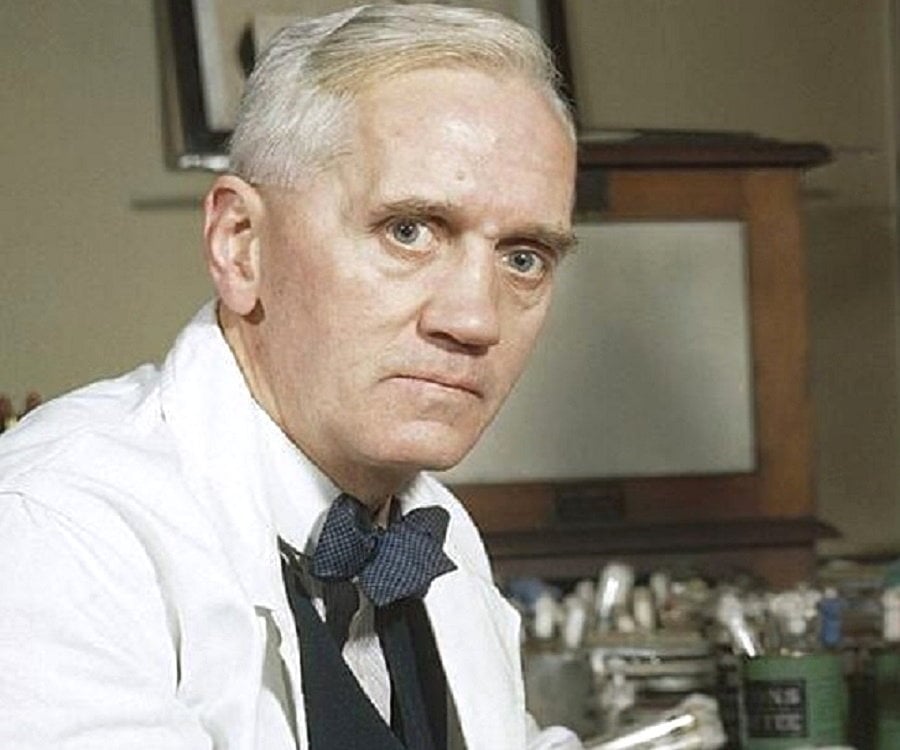
Also Known As: Sir Alexander Fleming
Died At Age: 73
Family:Spouse/Ex-: Dr. Amalia Koutsouri-Vourekas, Sarah
father: Hugh Fleming
mother: Grace Stirling Morton
siblings: Tom
children: Robert Fleming
Born Country: Scotland
Biologists
Microbiologists
Died on: March 11, 1955
place of death: London, England, United Kingdom
Grouping of People: Nobel Laureates in Medicine
Notable Alumni: Royal Polytechnic Institution, St Mary's Hospital Medical School
Cause of Death: Heart Attack
discoveries/inventions: Discovery Of Penicillin
More Facts
education: Imperial College London, Royal Polytechnic Institution, St Mary's Hospital Medical School
awards: Nobel Prize in Physiology or Medicine (1945)
-
1
When was Alexander Fleming born?
Alexander Fleming was born on August 6, 1881.
-
2
What is Alexander Fleming known for?
Alexander Fleming is known for discovering the antibiotic substance penicillin in 1928.
-
3
Where did Alexander Fleming make his penicillin discovery?
Alexander Fleming made his penicillin discovery at St. Mary's Hospital in London, England.
-
4
What was Alexander Fleming's profession?
Alexander Fleming was a Scottish biologist and pharmacologist known for his groundbreaking work in microbiology.
Childhood & Early Life
Alexander Fleming was born in Lochfield farm, Avrshire, Scotland, UK on 6th August 1881. He was born to farmer parents Hugh Fleming and Grace Stirling Morton (second wife of Hugh Fleming). He lost his father due to ill health at a tender age of seven only.
Fleming studied at Loudoun Moor School and Darvel School and moved to London at the age of thirteen to attend the Royal Polytechnic institution after attaining two scholarships for Kilmarnock Academy.
Following his elder brother Tom’s footsteps he also joined St. Mary’s Hospital Medical School (Paddington) in 1903 to study medicine which he completed with an MBBS degree in 1906.
Continue Reading Below
Career
Alexander Fleming joined the Research department at St Mary's and worked as an assistant bacteriologist to Sir Almroth Wright who was a master in vaccine therapy and immunology.
In1908 Fleming joined St Mary's as a lecturer after being awarded a gold medal in bacteriology, and served there till 1914.
Fleming practiced as a venereologist between 1909 and 1914. He became the first doctor to administer a drug against syphilis called arsphenamine (Salvarsan).
In 1928 he became a professor of bacteriology at the University of London.
He was a part of the Royal Army Medical Corps as a captain during the World War I and served in the war field hospitals in France where he studied the effect of antiseptics on the wounds.
He returned to St. Mary’s as assistant director of the inoculation department and later became the principal of the same in 1946 which was later renamed as Wright-Fleming Institute.
In 1951, he joined the University Of Edinburg as rector for three years.
Major Works
Antiseptics do more harm than good: While serving the field hospitals during the World War I in 1914 he reached the conclusion that antiseptics such as carbolic acid, boric acid and hydrogen peroxide (used to treat wounds) do more harm than cure. He found that they only cured surface wounds and failed to heal deeper. Along with Almroth Wright, he suggested an alternative of saline water for treatment.
Discovery Of Lysozyme
November 1921 saw the discovery of the antiseptic enzyme lysozyme. It happened when Fleming dropped a drop of mucus from his nose on a culture of bacteria. In the quest of finding its effect on the bacterial growth, he mixed it and studied for a few days, thus leading to this significant discovery for mankind.
Continue Reading Below
Other body fluids such as saliva and tears were studied with these bacteria and observed the failure of bacterial growth, thus rendering natural immunity from a number of health issues.
Today lysozyme is used in treating cold and throat infections, athlete’s foot and also as a preservative in food.
Discovery Of Penicillin
Having seen many soldiers succumbing to death due to Sepsis during the World War, Fleming got deeply involved in his search for antibacterial agents after having realized that antiseptics harmed the immunity system in the longer run.
Since 1927 Fleming had engrossed himself in studying about staphylococci. It was an accidental finding on September 3, 1928, wherein one on his fungus contaminated staphylococci culture destroyed all the surrounding staphylococci culture while other staphylococci colonies somewhat away were normal.
After further investigations and experiments, he identified this mould as being from was known to be Penicillium genus which hampered bacterial growth.
He initially called it “mould juice” but finally named the substance it produced Penicillin on 7th March 1929.
Though he had discovered penicillin but the challenge of stabilizing, purifying and producing it in large quantity still troubled Fleming. He continued experimenting until 1940 and then abandoned penicillin.
Just after Fleming abandoned his further research on penicillin, Howard Florey and Ernst Boris Chain at the Radcliffe Infirmary in Oxford started working on it with aim from the U.S. and the British government.
The mass production finally started after the Pearl Harbor accident leading to a level of production that changed the face of battlefield treatment and infection control since 1944.
Continue Reading Below
Awards & Achievements
Alexander Fleming, Florey and Chain collectively received the Nobel Prize in Medicine in 1945.
He was also awarded the Hunterian Professorship by the Royal College of Surgeons of England and has a number of other honorary degrees from various universities in America and Europe.
He became the president of the Society for general microbiology and also a member of the pontifical academy of science. Fleming had made it to almost every medical and scientific society in the world as an honorary member.
The laboratory where Fleming discovered penicillin is preserved as the Alexander Fleming Laboratory Museum in St. Mary's Hospital, Paddington.
The Imperial College School of Medicine has ‘The Sir Alexander Fleming Building’ as one of its main preclinical teaching areas.
The Royal Polytechnic Institution (presently the University of Westminster) has named one of its residential halls as Alexander Fleming House.
By the year 2000, penicillin was marked as the most important discovery of the millennium by three major Swedish magazines.
Personal Life and Legacy
On 24 December 1915, Alexander Fleming married Sarah Marion McElroy of Ireland, a trained nurse. Their only son Robert, born in 1924, followed his father to become a medical practitioner.
Fleming was knighted as Knight Bachelor by King George VI to become Sir Alexander Fleming in 1944.
Continue Reading Below
Post Sarah's death in 1949, Fleming remarried a colleague at St. Mary’s, Dr.Amalia Koutsouri-Vourekas, on 9 April 1953 who died in 1986.
Fleming succumbed to a heart attack at the age of 73 on 11 March 1955 and was cremated at St. Paul’s Catheral.
Fleming was always modest in accepting his role in the discovery of Penicillin and described his popularity as ‘Fleming Myth". Nonetheless, he always praised Florey and Chain but still turned out to become the hero of modern healthcare.
Sir Henry Harris’ remark says it all: "Without Fleming, no Chain; without Chain, no Florey; without Florey, no Heatley; without Heatley, no penicillin”.
On his tour to America, this great scientist and Nobel Prize winner was offered a gift of $100,000 as a token of respect which he did not accept rather donated to the laboratories at St. Mary’s Hospital Medical School.
Facts About Alexander Fleming
Alexander Fleming was known for his love of gardening and often spent his free time tending to his plants and flowers.
Fleming had a pet cat named "Dusty" who would often keep him company in his laboratory while he worked on his experiments.
He had a knack for playing the violin and would occasionally entertain his colleagues with impromptu performances during breaks.
Fleming was a firm believer in the importance of taking breaks and would often encourage his colleagues to step outside for some fresh air to rejuvenate their minds.